For years, my research has been internet-based. There is an entire world of research online. It's powerful and amazing.
One can write a book based on internet research, and 99% of readers will appreciate the depth of detail and research behind it. One can even find significant factual errors in nonfiction books that your fiction book can correct based on examining primary source documents available online.
But for that 1% of readers — those who live in the community where a scene is set, who Google things when reading, even the small things, or who have a deep expertise in some topic covered by the book — for these readers, boots-on-the-ground, in-person research is essential. There is no substitute for in-person research of an author's scenes, characters, and events.
On a family vacation to Spain, I got to do that boots-on-the-ground research, and it was amazing! I was able to fix small details like this and large ones like the fact that King Ferdinand and Queen Ysabella hadn't moved into the Alhambra months after the Moors left, so I had to move a scene from there to their military encampment.
Below is a picture journey through Columbus' history in Spain in chronological order of Columbus' life and voyage, not in the order we visited sites.
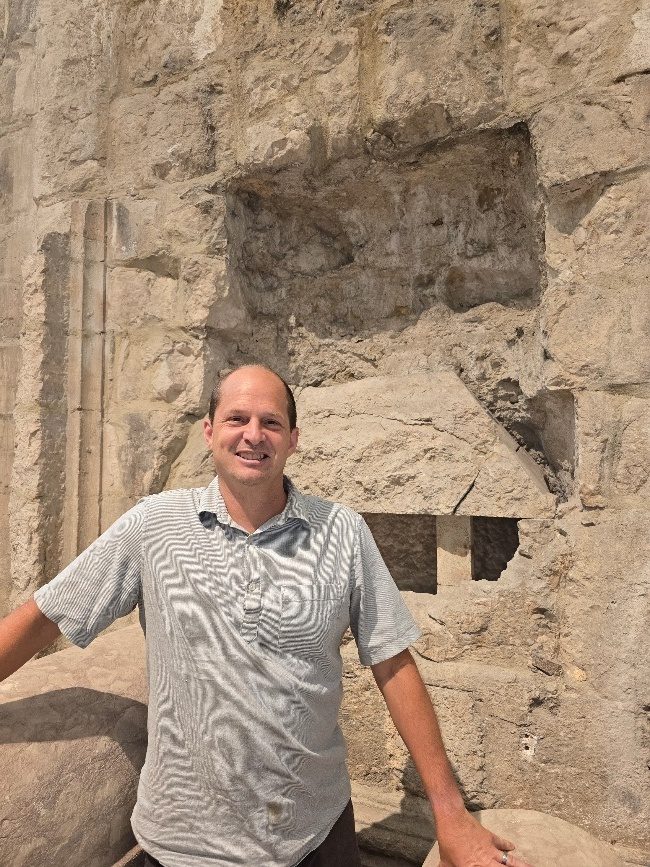
Carmen Convent · Lisbon, Portugal
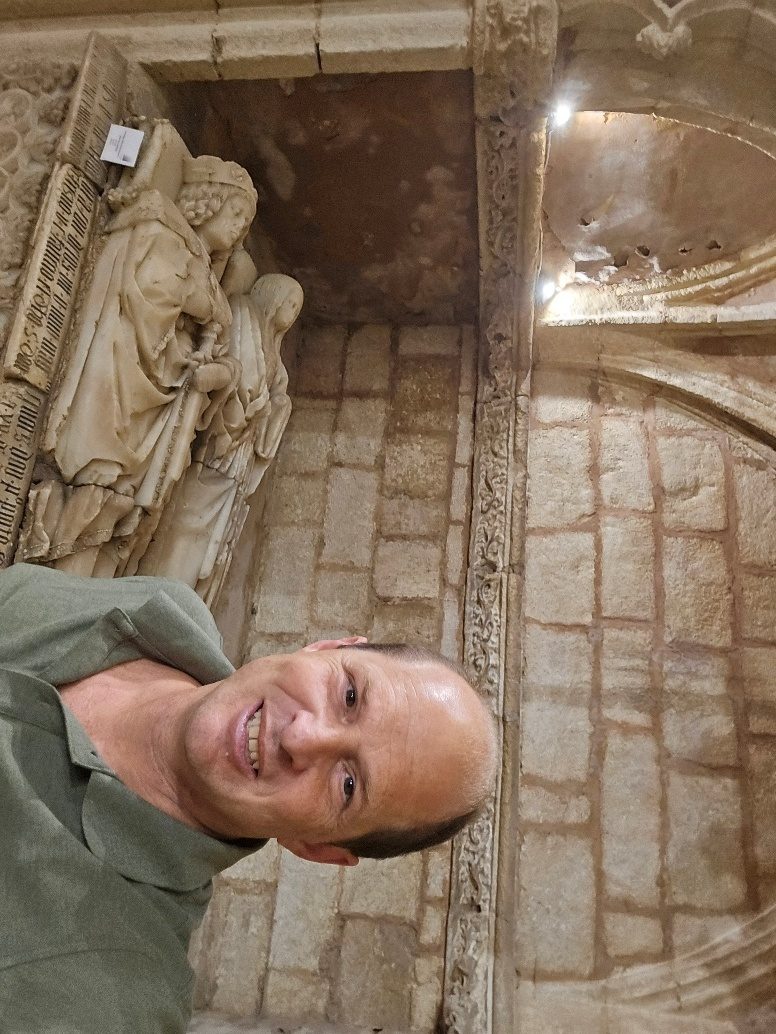
It starts in Portugal, as did Columbus' efforts to get funding for crossing the Atlantic from King John II. Columbus married Filipa Moniz Perestrelo, a member of the Portuguese nobility, in 1479. She died in late 1484 and was buried in the Chapel of Piety inside the Carmo Convent — which, like much of Lisbon, was heavily damaged by a 1755 earthquake. Though the records and markings are lost to the earthquake and time, it is believed her body is located behind me in this picture.
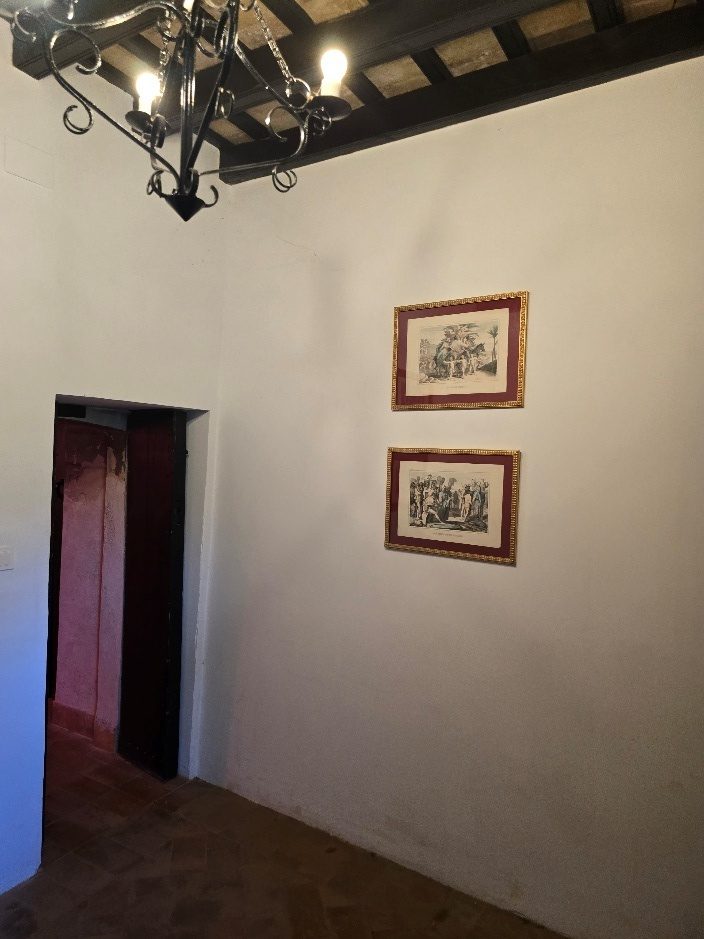
La Rábida Monastery · Rábida, Spain
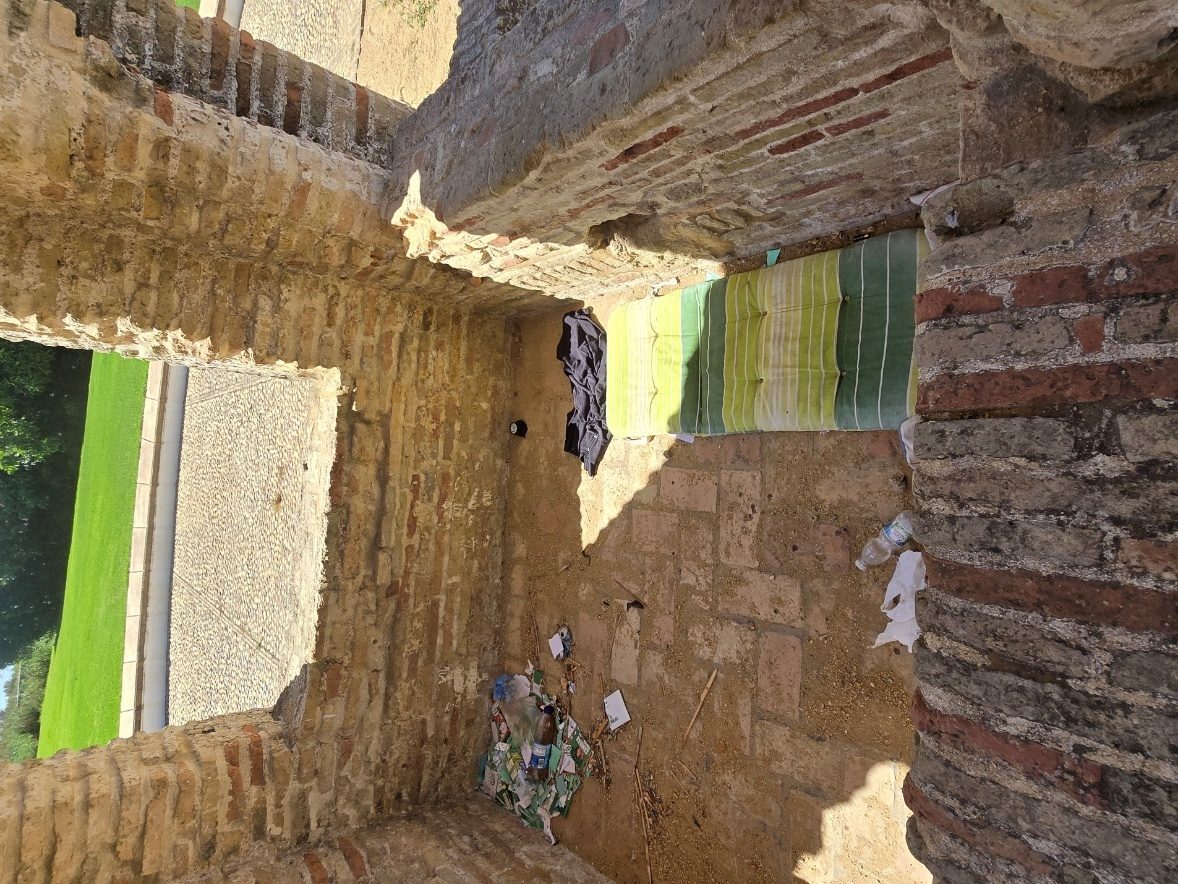
The room where it happened. Our next stop was to La Rábida Monastery. This is the room in which Columbus is believed to have met with Martín Pinzón, a figure of supreme importance to the 1492 voyage, but who has largely been forgotten in history because he died in March of 1493 shortly after the expedition returned to Europe. It was in this room that Pinzón agreed to go on the voyage.
La Giralda Tower · Seville, Spain
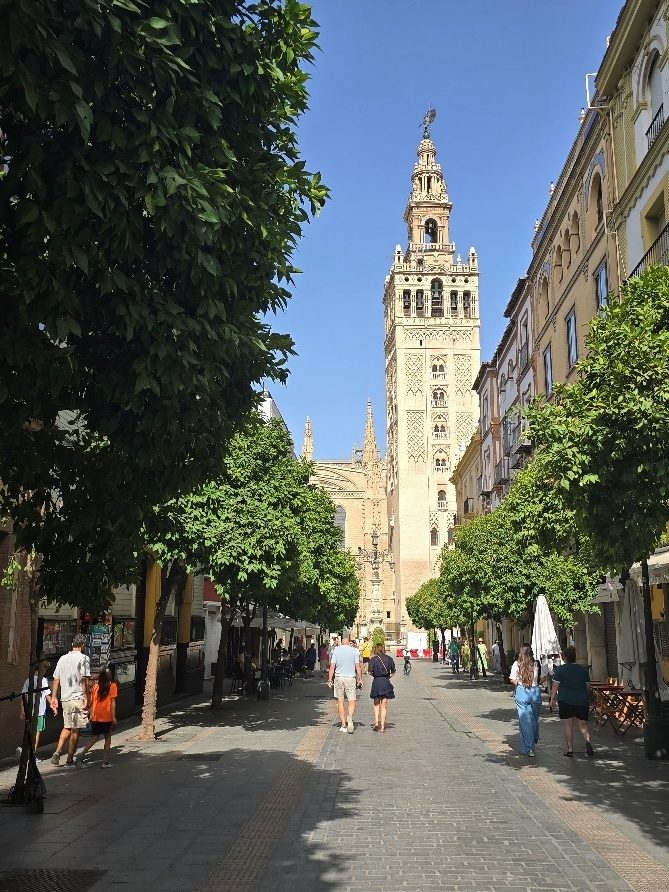
In the book, Columbus returns to Seville to hear the bells ringing for the first time after a renovation — a common occurrence. While the rest of the Great Mosque of Seville was converted to the Seville Cathedral and then demolished and rebuilt into the larger and taller Seville Cathedral millions visit today, the Giralda tower below the belfry was preserved. Originally a minaret, it became a bell tower in the 1400s, and the highest addition was added in the 1500s. I was surprised at the size of La Giralda. And though it's not in my books, I was also surprised to learn that a family used to live up in the tower in order to ring the bells every hour and on other occasions.
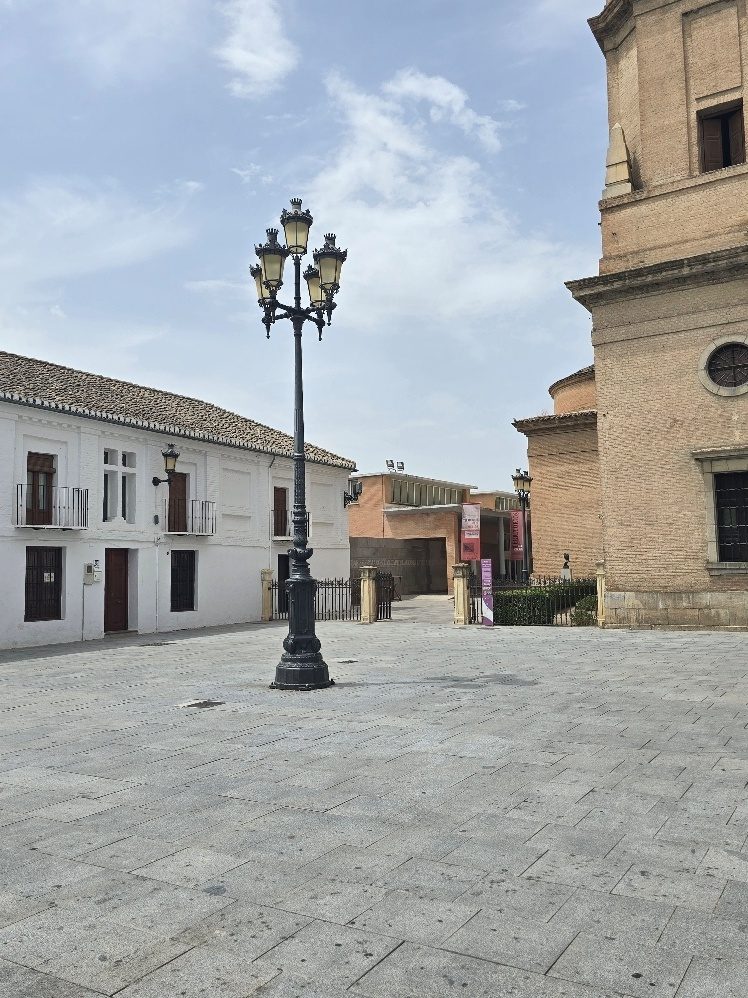
Plaza de Armas · Santa Fe, Spain
This is approximately where the Capitulaciones de Santa Fe were signed by King Ferdinand and Queen Ysabel. This was from inside their military encampment — of which only the four gates, one for each cardinal direction, still stand. I had to change it from early drafts of the manuscript, in which I had the Capitulaciones signed in the Alhambra about fifteen miles away.
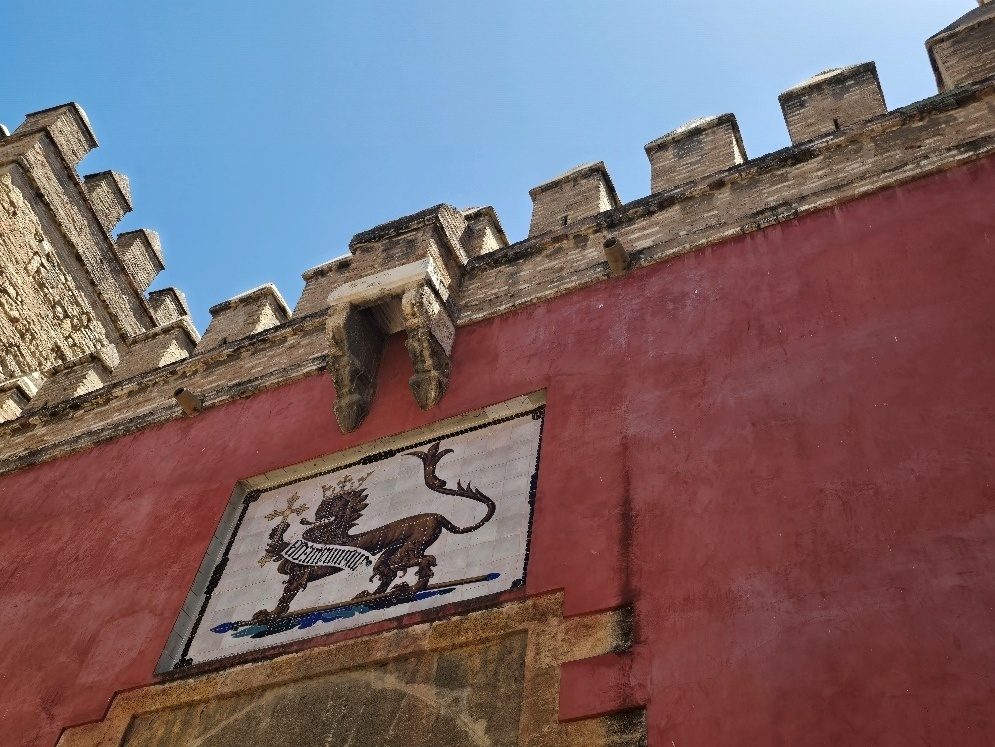
Puerta de León · Seville, Spain
The Puerta de León. This lion and Latin phrase, Ad Utrumque, which means "prepared for both," was painted in 1894. But the gate is from the 1300s and it was called Gate of the Hunt (Puerta de la Montería) because it was the gate used by King Peter the Just (or Cruel, if you were a noble of his day, because he held them to the same standards of justice as common people) and his men when they went hunting.
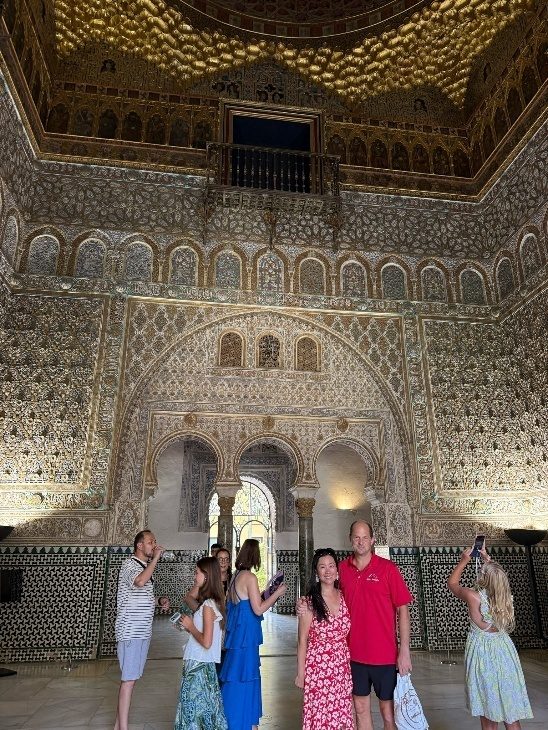
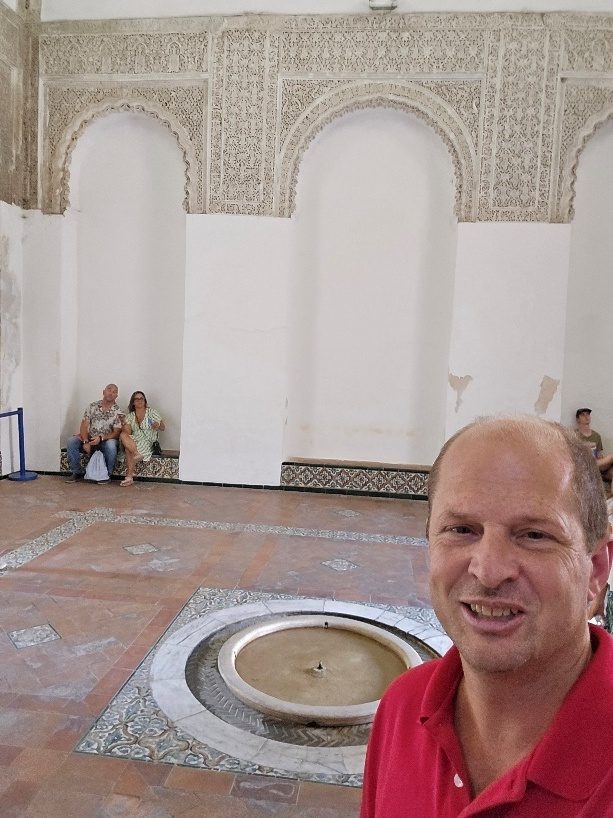
Hall of Justice, Alcázar de Sevilla · Seville, Spain
At first, I had a meeting with Luis de Santángel, the finance minister who organized the funding for the Columbus expedition, taking place here in the Hall of Justice (Sala de Justicia). But I learned on my trip that this room wouldn't have worked well because of its location and the fountain in the middle of the room. So I moved it to the Hall of the Ambassadors (Salón de los Embajadores), which requires special permission from the King and Queen and so originally I didn't think it could be used — but I learned on my trip that ministers, such as de Santángel, could occasionally use it for royally backed efforts, such as the Columbus voyage.
Sepulture of Pedro Portocarrero · San Jorge Church, Moguer, Spain
The tomb of a minor character in the book who hosts a lunch. What I learned is that he was younger in 1492 — twenty-two years of age — than I had thought, that he was mayor of Seville later in life, and that he helped found the second Columbus voyage. None of these are relevant to the book, but I found the details interesting.
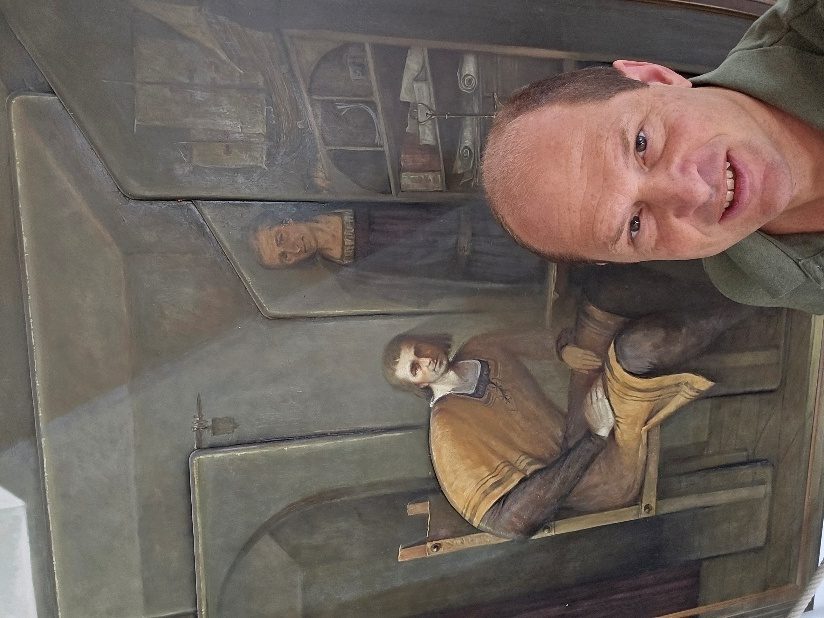
At that lunch meeting, Columbus meets Juan Niño, who I believe was half-African. One of the biggest pieces of evidence against this theory online is the painting below. It is alternatively depicted as a painting of Juan Niño's father, Alfonso Pérez Niño, or his brother, Pedro (Pero) Alonso Niño, showing that they were Caucasian. But this painting was done in 2005, and so is not a historical indicator of anything except a modern artist's rendition.
Watching the World Cup · Granada, Spain
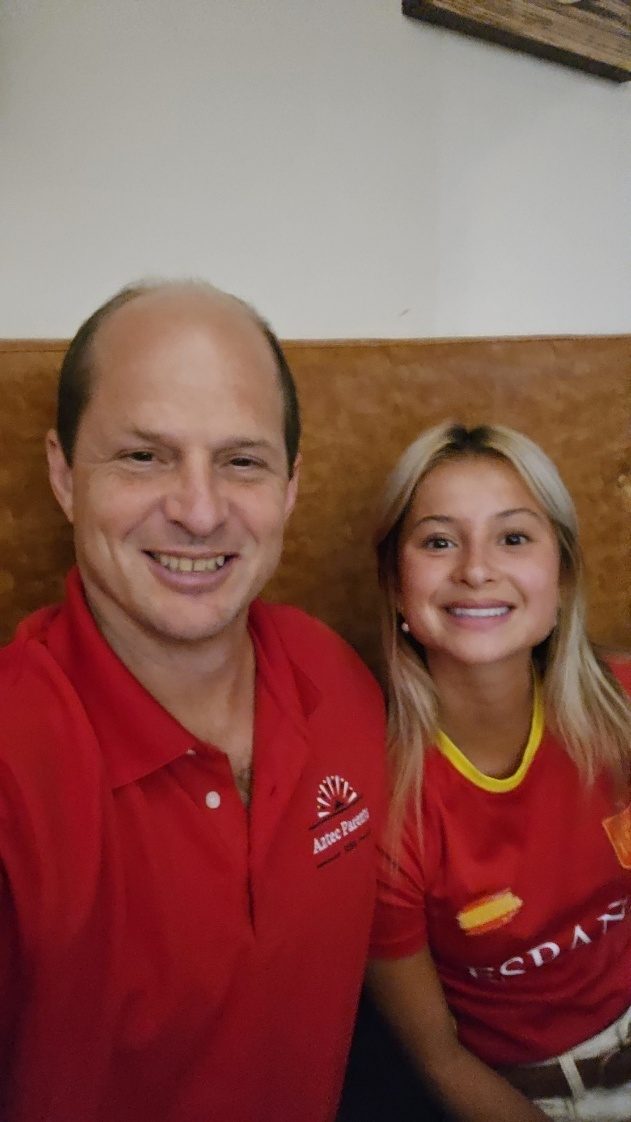
Definitely not Columbus related, but my family and I loved watching Spain win the World Cup — while in Spain. A day later, there were millions of people in the streets of Madrid celebrating with the team when they returned home as champions.
La Fontanilla · Palos de la Frontera, Spain
This is the 13th-century public fountain that provided the drinking water brought on the 1492 Columbus voyage. One of the scenes in the book takes place here as the leaders of the expedition are introduced and orders for the beginning of the voyage are given. Behind it, one can see the Church of San Jorge, where the proclamation was read from the King and Queen about the Columbus voyage and the town's responsibility to provide two caravels without charge for violating the 1479 Treaty of Alcáçovas that gave the Portuguese a monopoly on the Guinea trade route.
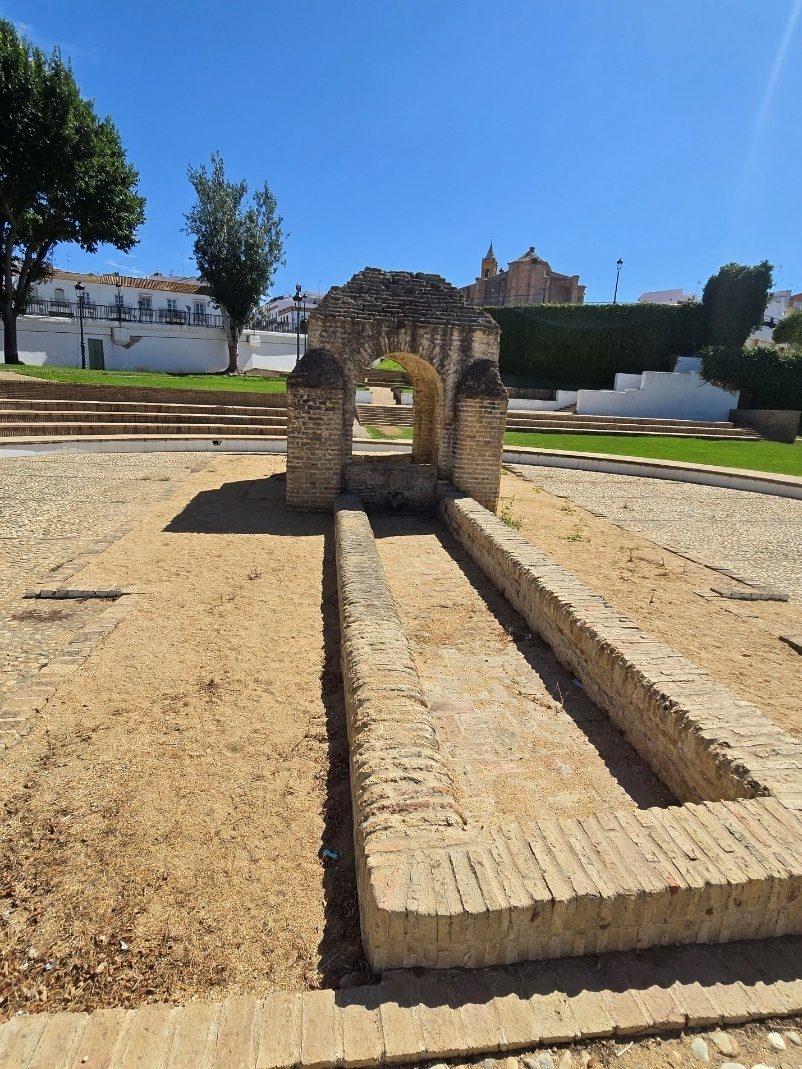
But today, without any water in the fountain, it appears to serve other needs . . .
La Santa María, Niña, and Pinta · La Rábida, Spain
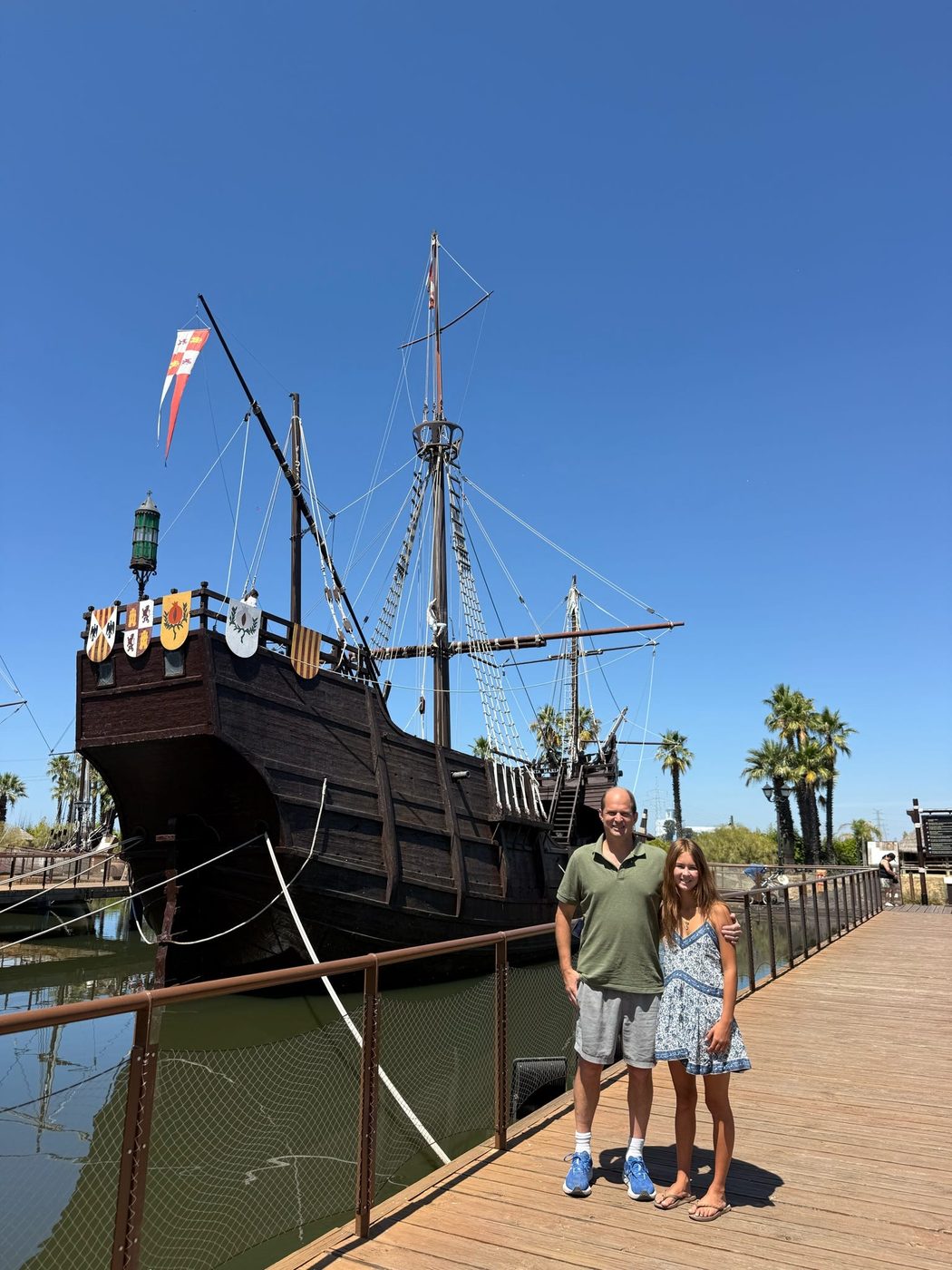
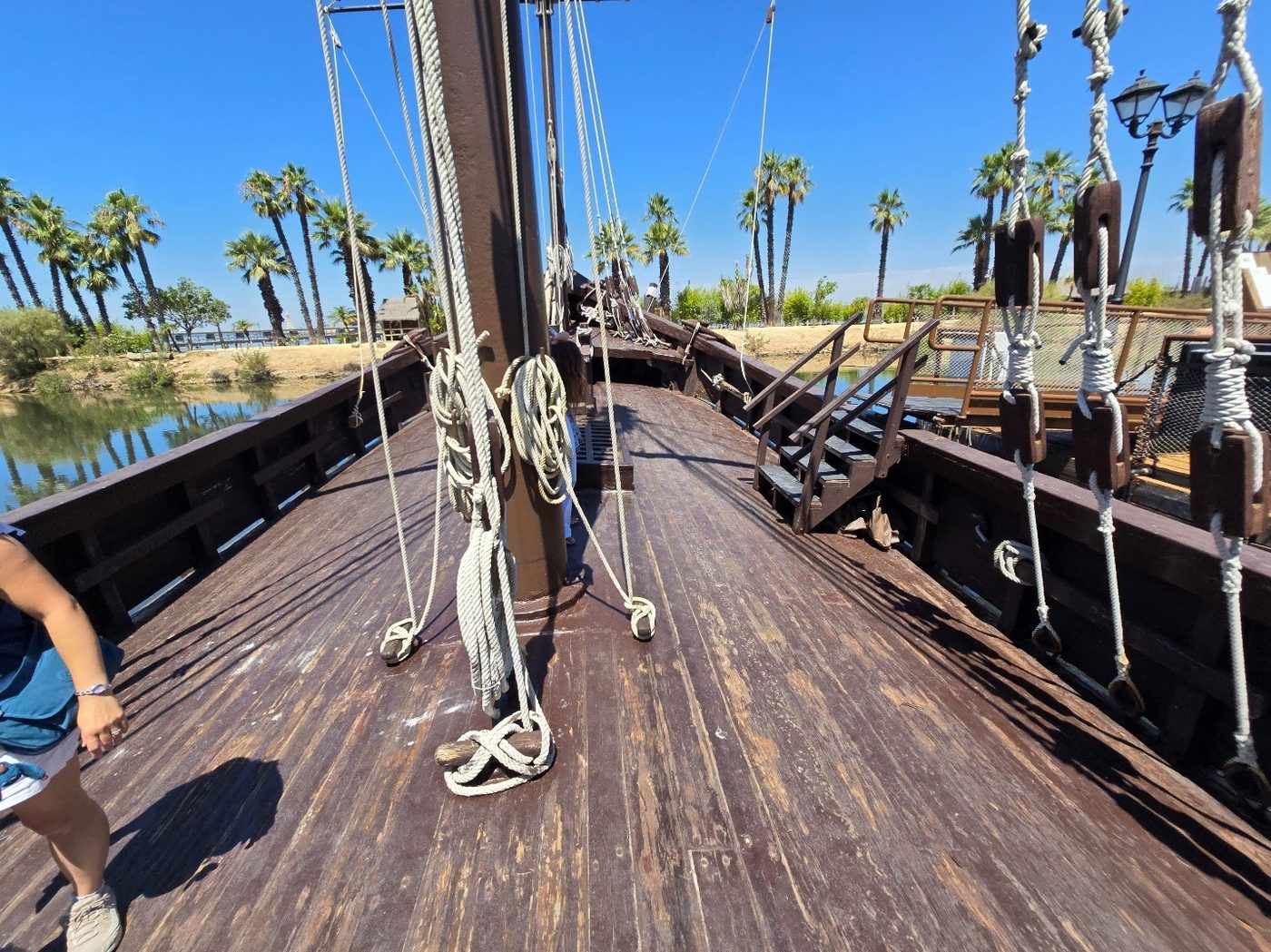
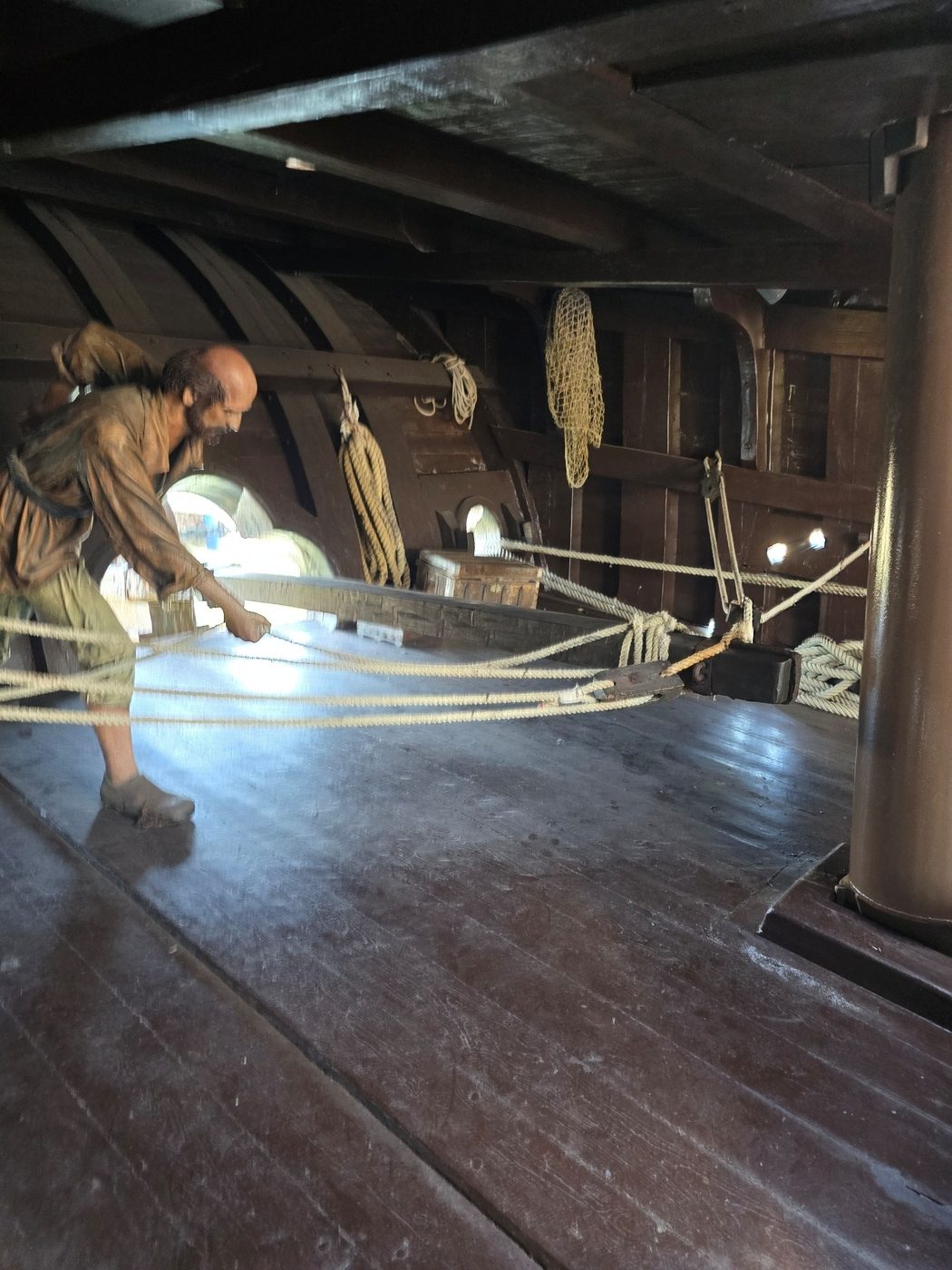
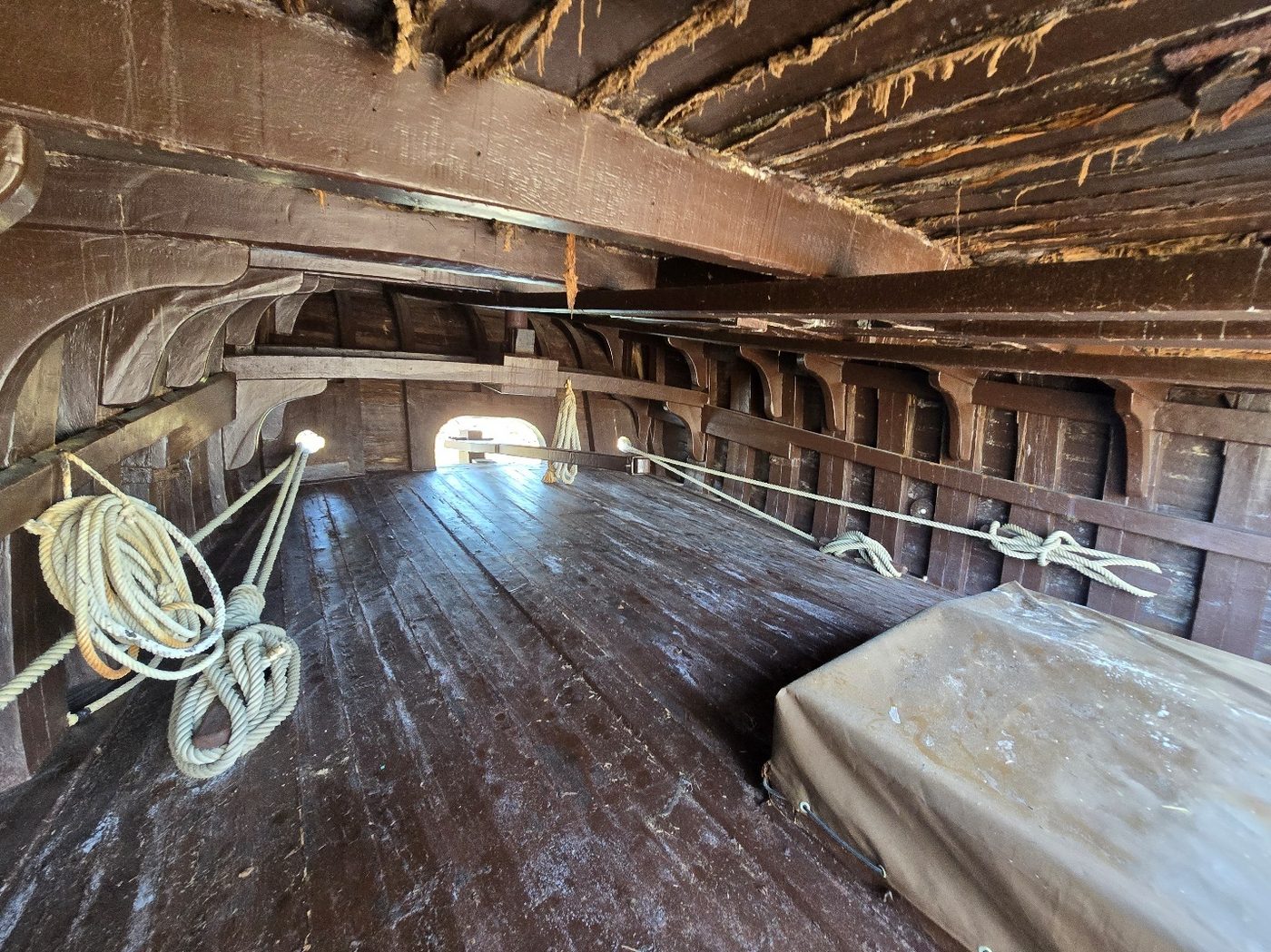
We explored the replicas of the three ships that were part of the 1492 voyage. These three ships pictured have crossed the ocean to the Caribbean and returned, recreating the Columbus voyage. I was able to observe some things that were wrong in these reconstructions based on primary source documents — such as that La Niña had four masts and as a result was slightly longer than La Pinta. However, there were several things I discovered that I had to change in my manuscript as well. For example, I didn't realize that there were so few cabins on each vessel. While I think there were more than on these reconstructed vessels, I did decrease the number of cabins. Also, I was shocked by the amount of space taken up by the rudder system. It shouldn't have surprised me, as the rudder systems on modern boats take up quite a bit of space too, but it is underneath the cockpit and so less noticeable. Still, I had to get rid of the whipstaff as the steering mechanism in the manuscript. A whipstaff is a device that was used to steer about a hundred years after the Columbus voyage took place. It allowed the helmsman to see where he was steering. I saw in these reconstructions how the pilot was forced to steer by a compass and by the clouds, but could see absolutely nothing on the horizon in front of him, including their course heading, other ships, and objects in the water. The pilots were completely dependent on lookouts to guide them.
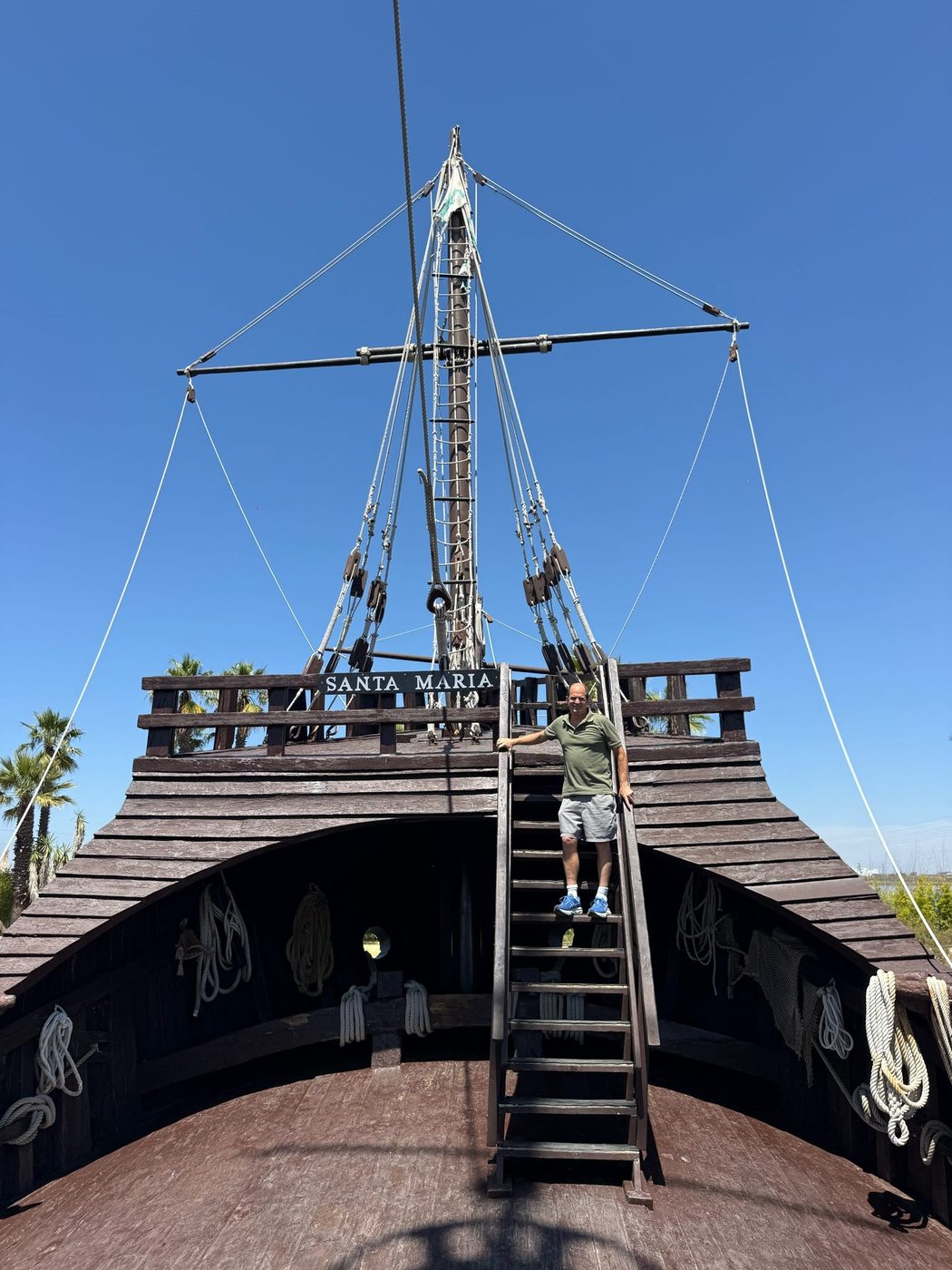
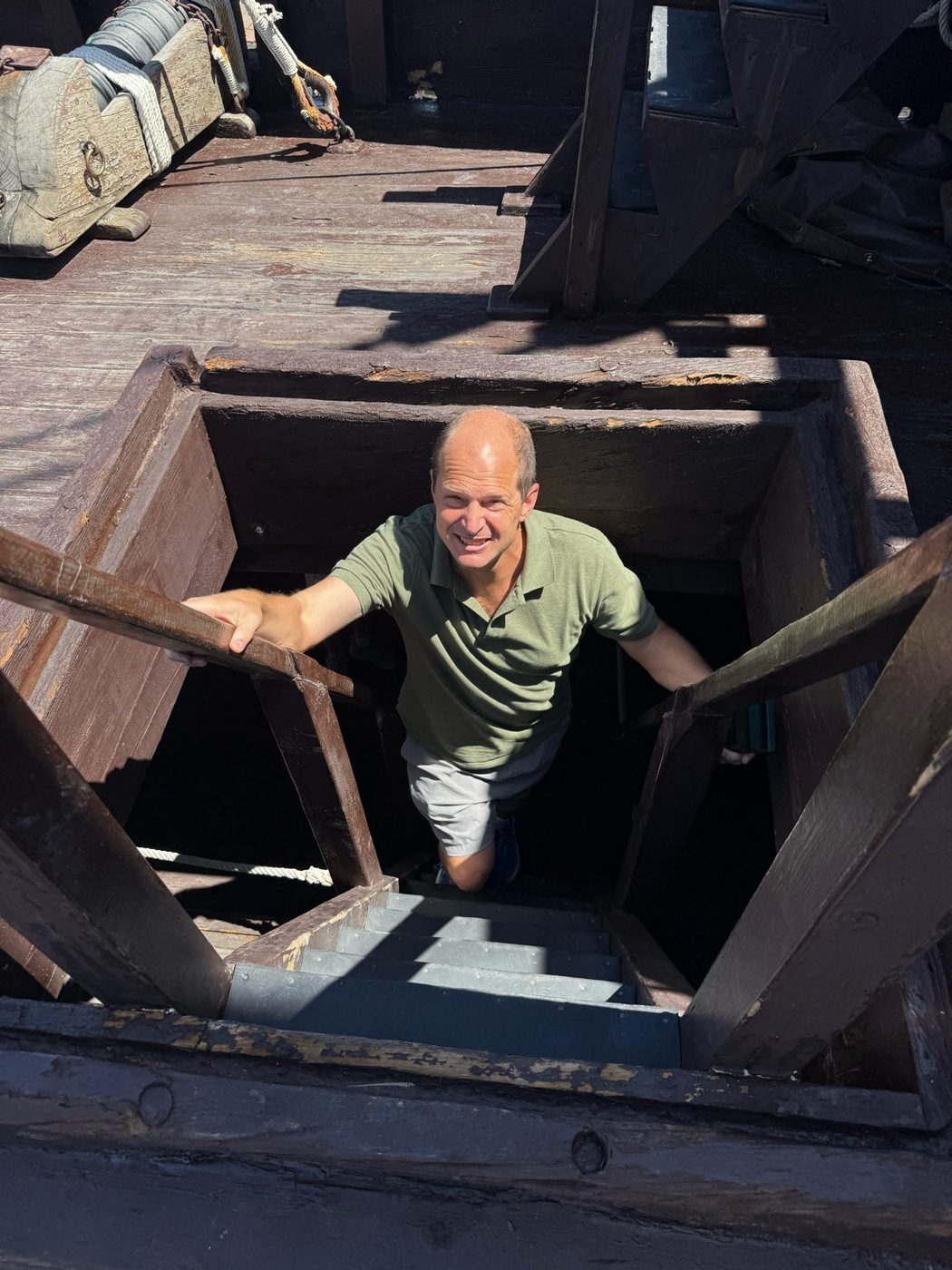
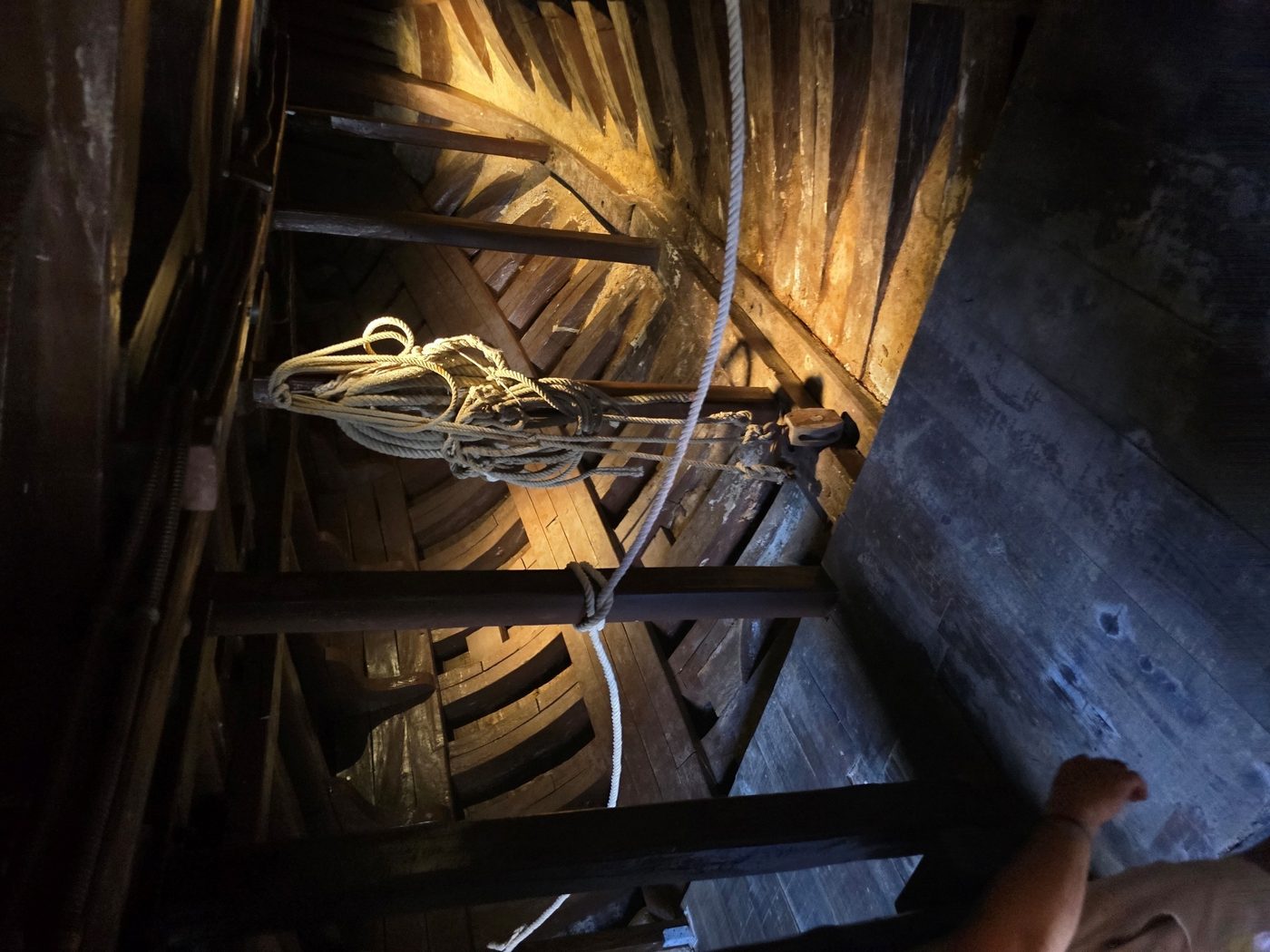
The other thing that surprised me is how convex the deck was. Of course this was to allow the main deck to drain sea spray and rain, but there was about a foot of difference in height from the center to the edges of the deck.
Museo Naval · Madrid, Spain
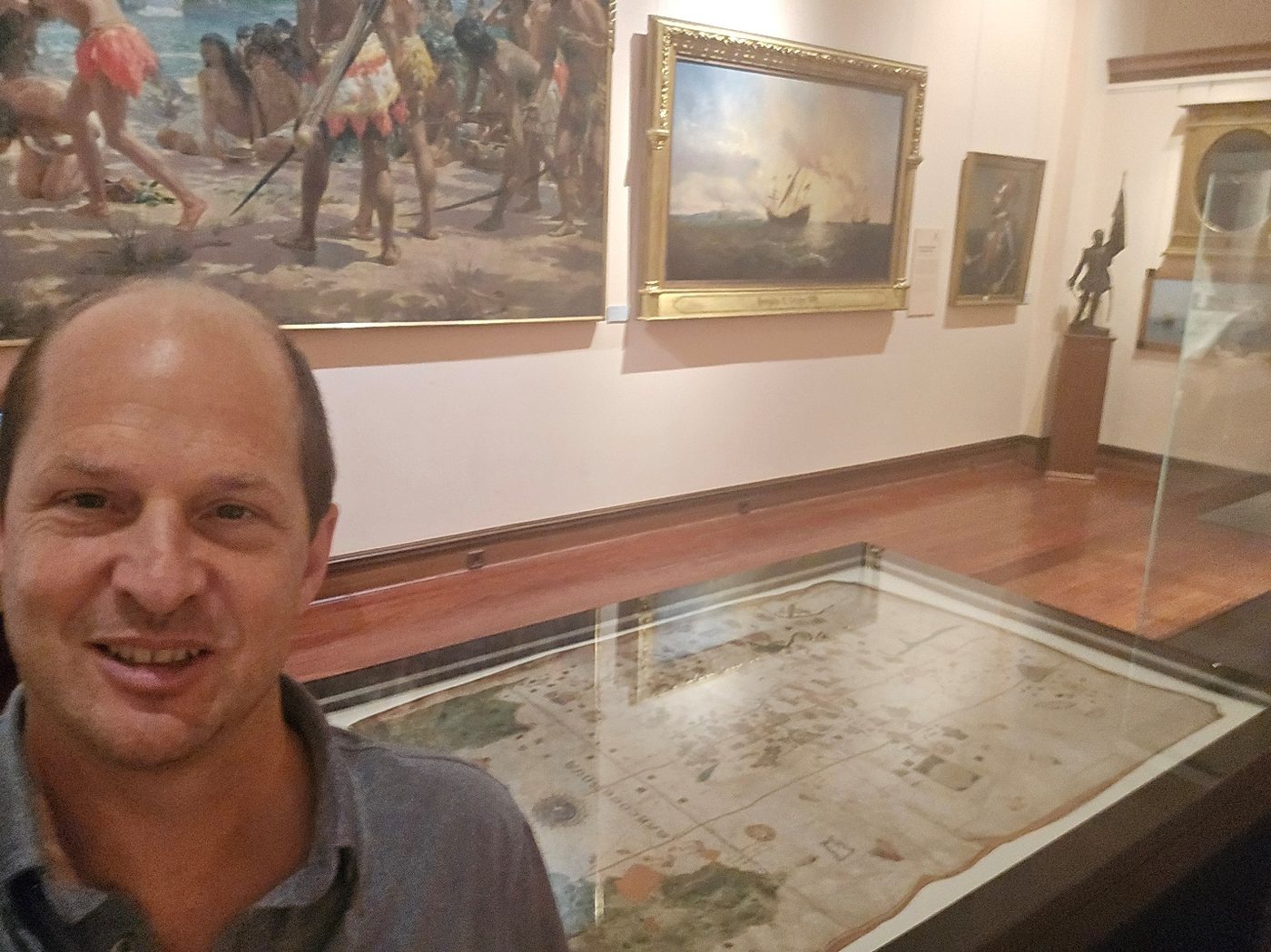
One of the most important stops was to the Naval Museum in Madrid, where I was able to see the 1500 map created by Juan de la Cosa — the first ever map of the New World. By observing the island of Guanahani first-hand and comparing it to other islands on the map made with the same pigment color, I was able to conclude that Guanahani was one island and not two, as one leading landfall aficionado has hypothesized.
Tomb of Christopher Columbus · Seville Cathedral
Lastly, in the Cathedral of Seville, we were able to see the tomb of Christopher Columbus. I was surprised at how many people were taking pictures of his tomb — it was the most popular destination within the Cathedral of Seville. We learned the story of how his body had been moved in 1542 from Seville to the Cathedral of Santo Domingo in Hispaniola, per the Columbus family's wishes. Then in 1795, his remains were moved to Cuba so as to not fall into French possession after they gained control of Hispaniola. Then in 1898, the remains were brought back to Seville. Or so history tells us. When the Columbus tomb in the Cathedral of Seville was opened to conduct a DNA analysis, they found remains from multiple corpses, and only 200 grams of remains that could be confirmed as belonging to Christopher Columbus.
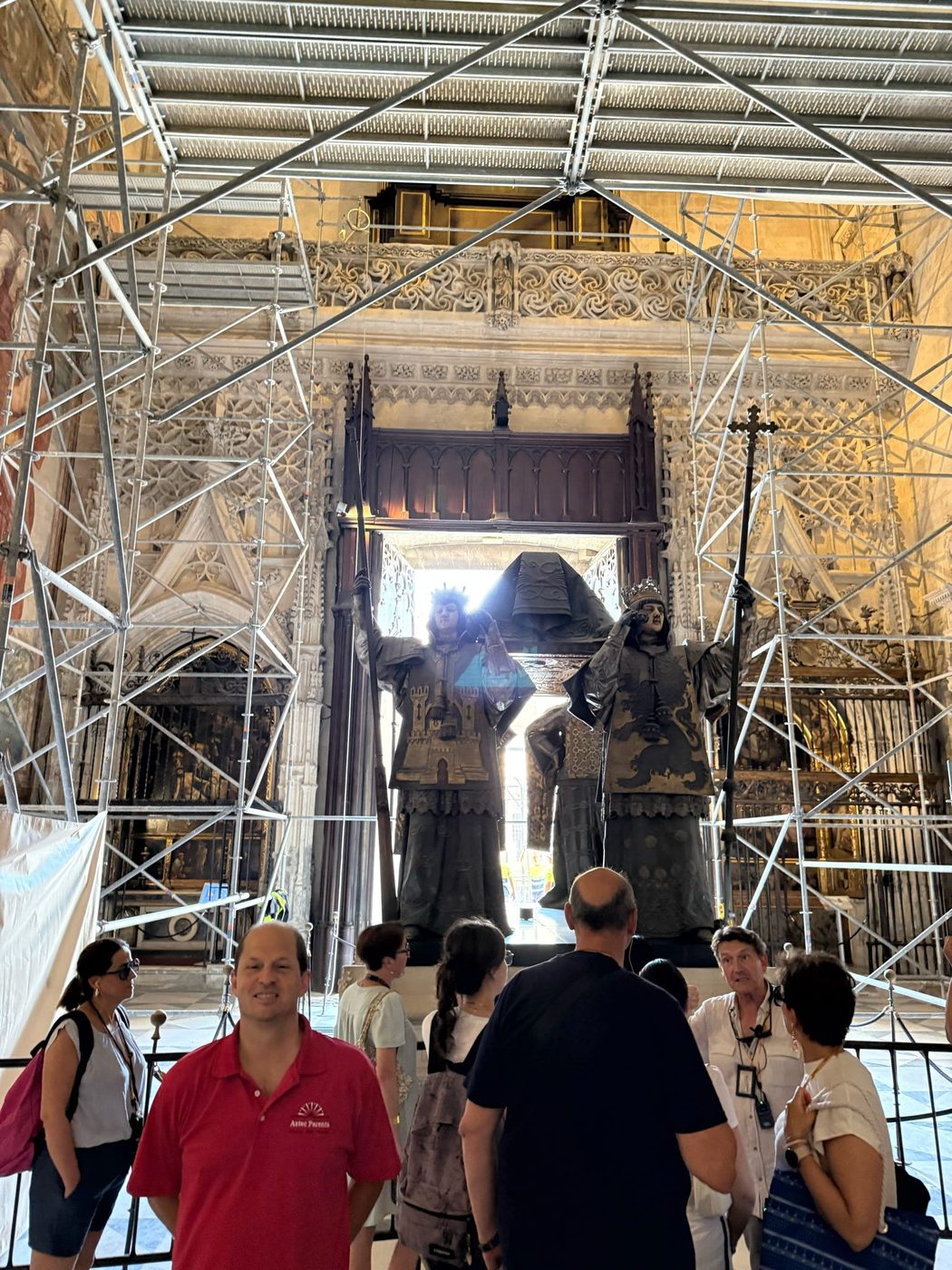
That concludes quite an informative research trip to Spain, with an appropriate ending: what historians have told us about Columbus — even about his remains after his death — is not the actual truth. Many of the accounts and conclusions we have been told, in everything from hearsay to Pulitzer Prize‑winning nonfiction books for five hundred years, are misleading, exaggerated, or just completely wrong. This trip to Spain helped make the historical fiction in the AMERICA series of books as accurate and well-researched as any nonfiction or fiction account of the 1492 Columbus voyage.
Curious how these details show up on the page?
Explore the AMERICA Series →