10 Proofs the Catholic Church Has Always Thought the World Was Round
One of the questions that got me started on this research was: why did the Church support the Columbus expedition if they thought the world was flat? The answer is that they didn't think it was flat. They never did. Here is the proof.
1. Ptolemy's Geographia Was Standard Church Education
The second-century Greek astronomer's eight-volume work explicitly described a spherical Earth with mathematical coordinates. It was copied, studied, and taught in medieval European monasteries and universities for over a thousand years. The Church didn't suppress it — it preserved it. Thus, the Church actively taught about a spherical earth rather than suppressing the idea of a round earth.
2. Lactantius and Cosmas Were Ignored
In early church history, there were two flat-earth proponents: Lactantius (265–345 CE) and Cosmas Indicopleustes (c. 540 CE). However, they were essentially unknown in the Middle Ages. Cosmas's work survived in only two manuscripts — one in the Laurentian Library in Florence, one in the Vatican — and its existence was forgotten for centuries until a French scholar discovered it in the late 17th century. It was not translated into Latin until 1706, by which time the Church had been teaching Ptolemy's Geographia for over a thousand years. Lactantius was ignored because the Church had declared his works heretical. The fact that the only two Church voices that argued for a flat earth were suppressed and forgotten shows a long-standing theological disposition against flat-earth theories.
3. Saint Augustine's Actual Argument Was Misread
Augustine wrote that it would be impossible for men to live "with their feet opposite ours" — meaning he doubted inhabited antipodal continents, not that he thought the Earth was flat. The flat-Earth myth partly rests on misreading Augustine's specific argument about antipodes as a blanket rejection of spherical Earth theory.
4. Thomas Aquinas Used a Spherical Earth as Philosophical Bedrock
In the 13th century, one of the Church's supreme theological intellects built arguments in his Summa Theologica on the assumption of a spherical Earth. You don't use a premise to prove your theology if your Church considers that premise heresy.
5. Medieval Universities Taught Spherical Earth as Settled Science
By the 13th century, European universities — all founded under Church authority — taught Sacrobosco's De Sphaera, a standard astronomy text that opened with the statement that the Earth is a sphere. This was curriculum, not contraband.
6. The Church Commissioned Centuries of Art Depicting Christ Holding a Spherical Earth
The globus cruciger — a sphere surmounted by a cross, representing Christ's dominion over a spherical world — appears in Church-commissioned paintings, manuscripts, and frescoes for centuries before Columbus sailed. Artists paid by the Church, painting for Church settings and devotional prayer books, depicted Christ literally holding a globe. If Church doctrine taught a flat Earth, none of these works would exist. Every one of the examples below predates Columbus's 1492 voyage.
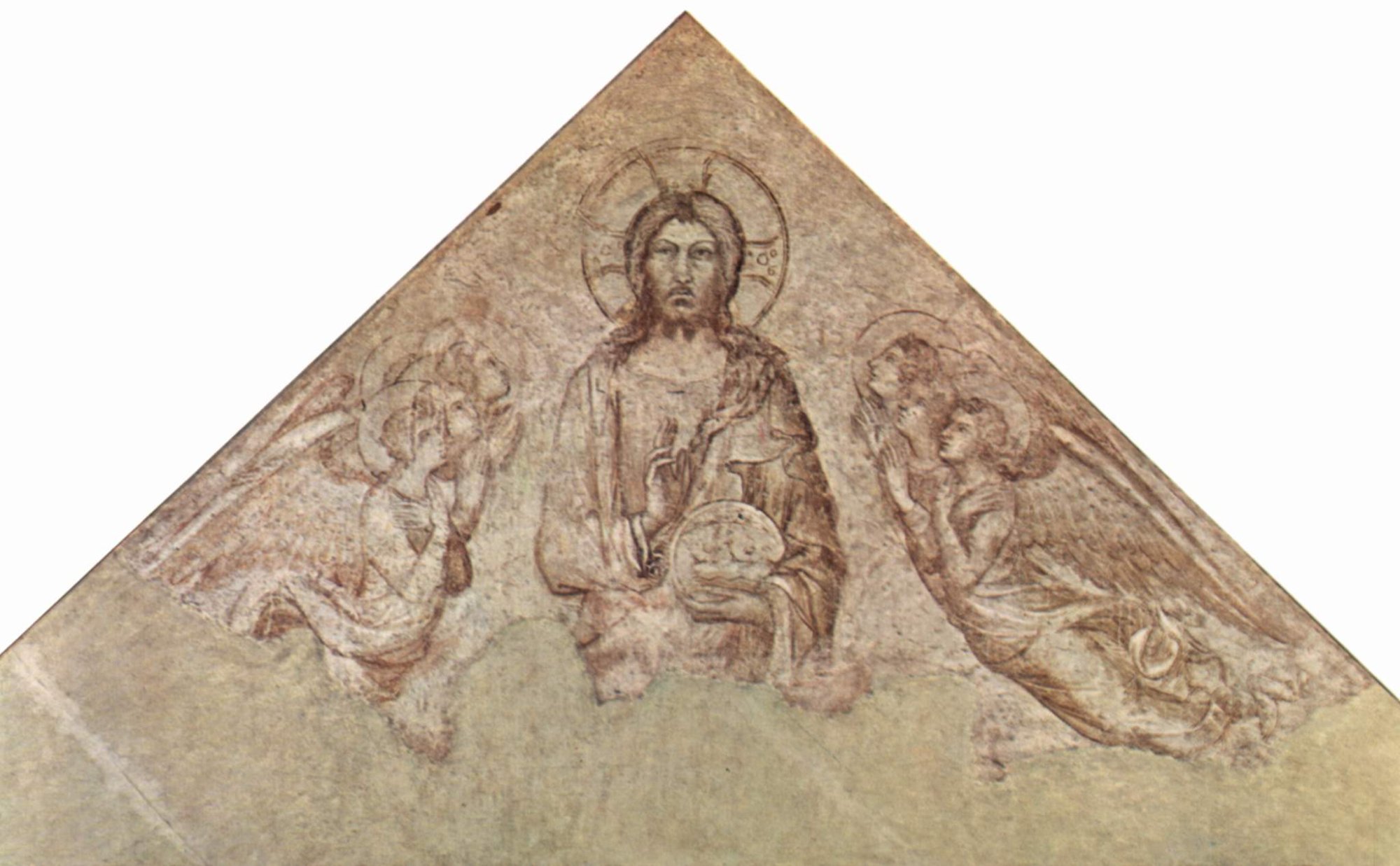
c. 1341
Simone Martini — Salvator Mundi Surrounded by Angels
Fresco. One of the most important Italian painters of the 14th century, painted directly onto a church wall for congregational worship.
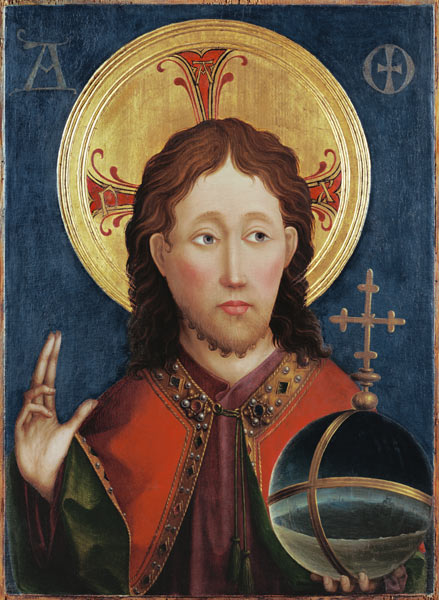
1334
Unknown Middle Rhenish Painter — Christ with Globus Cruciger
Städel Museum, Frankfurt. Panel painting from Bavaria depicting Christ holding a sphere labeled Africa, Europe, and Asia.
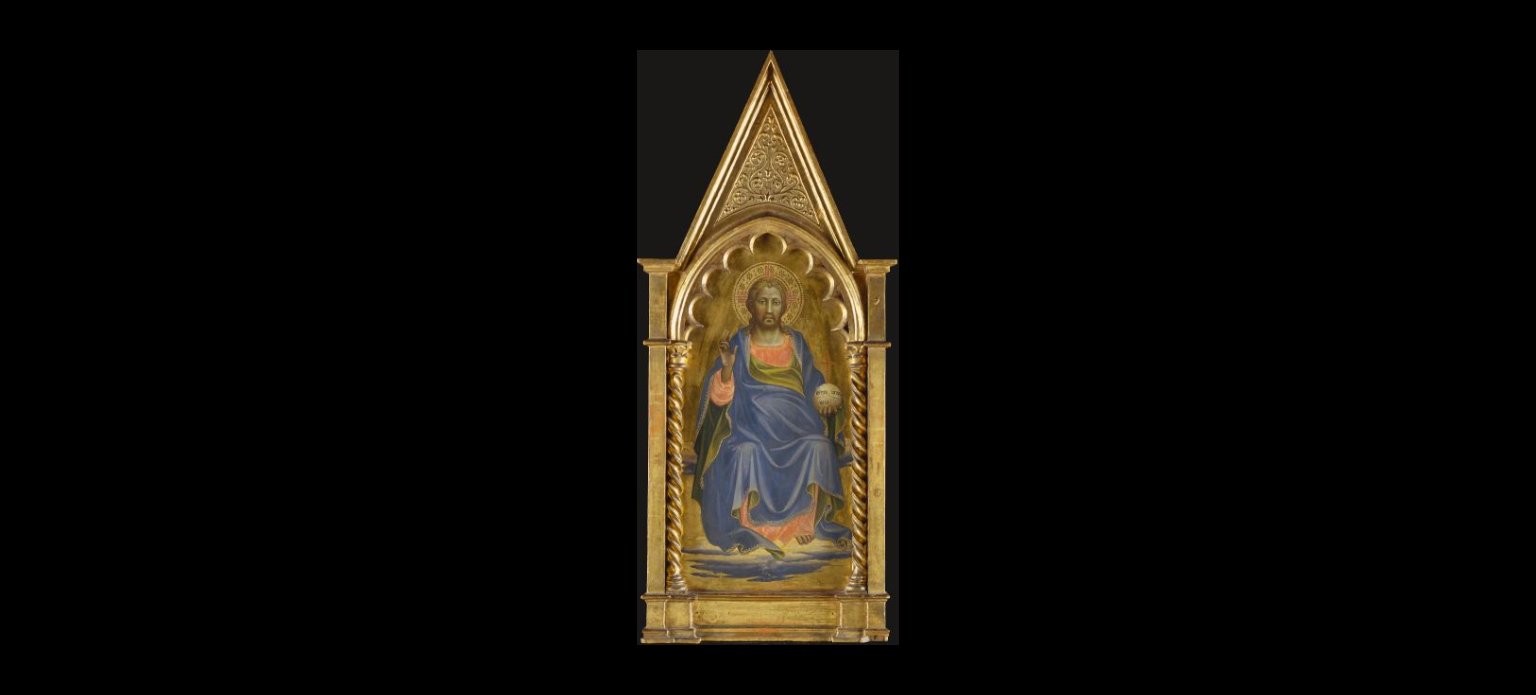
1404–1407
Gherardo Starnina — Christus als Salvator Mundi
Städel Museum, Frankfurt. Florentine painter commissioned by the Church; the orb is labeled Africa, Europe, and Asia.
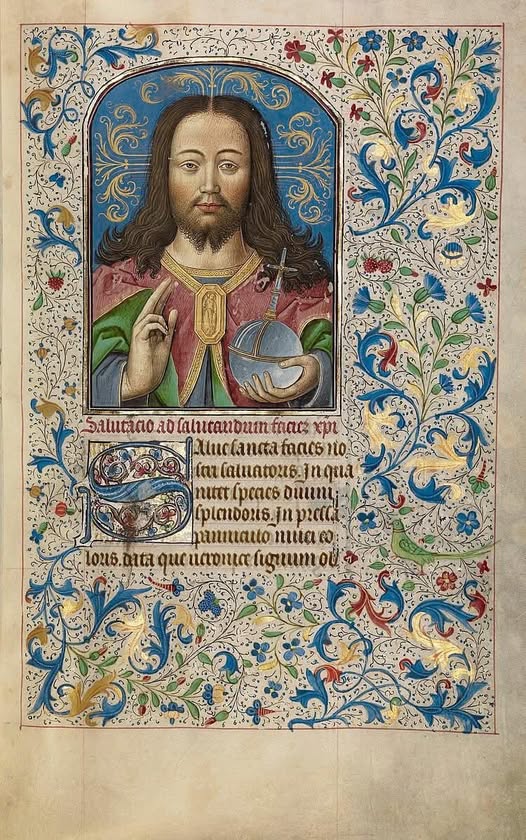
c. 1460
Workshop of Willem Vrelant — Arenberg Hours
Getty Museum, Los Angeles. A Book of Hours — a private Catholic devotional prayer book held during daily worship. Christ holding a spherical Earth was the chosen image for the most intimate act of personal Catholic prayer.
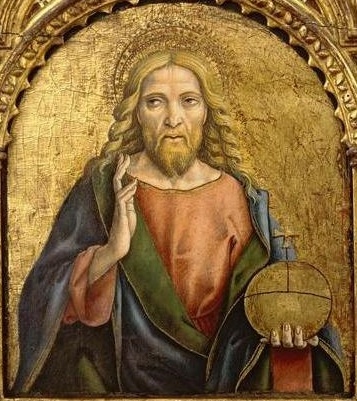
c. 1472
Carlo Crivelli — Cristo benedicente
El Paso Museum of Art. Commissioned exclusively by Franciscan and Dominican religious orders — not secular patrons.
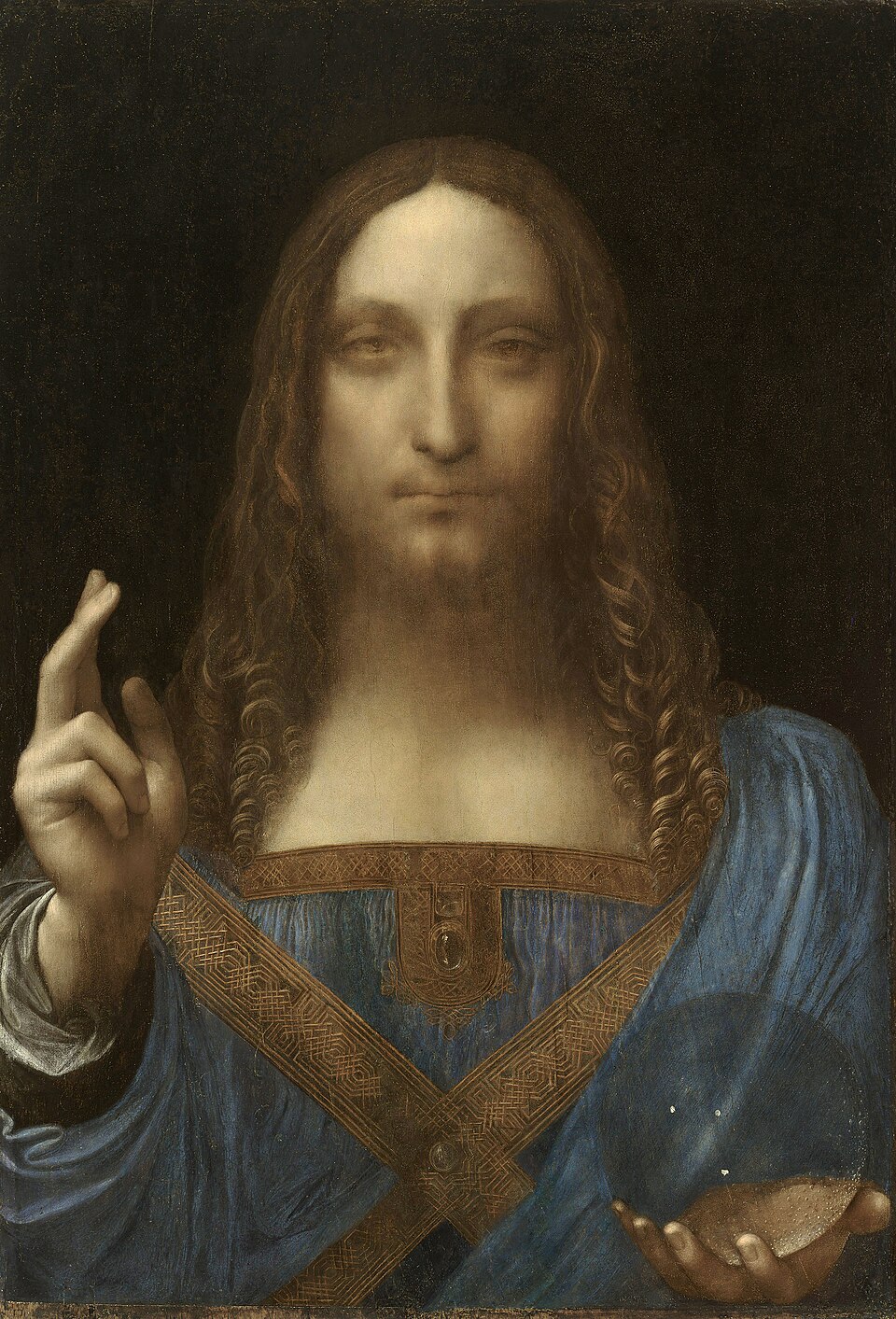
c. 1499–1510
Leonardo da Vinci (attributed) — Salvator Mundi
Currently held in Saudi Arabia. Sold at Christie's in 2017 for $450.3 million — the most expensive painting ever auctioned. The crystal orb represents Christ's dominion over a spherical world.
7. The Toscanelli Correspondence of 1474
A Florentine mathematician wrote to the King of Portugal proposing a westward sea route to Asia, calculating distances based entirely on a spherical Earth. This letter circulated among educated Europeans, reached Columbus, and influenced his confidence in a westward voyage. No Church authority condemned it as heretical.
8. Hermannus Contractus Calculated Earth's Circumference
A Christian monk and scholar calculated the circumference of the Earth — a calculation that is only meaningful if you assume the Earth is a sphere. The Church not only tolerated this work, it preserved it.
9. The Franciscan Friars of La Rábida Actively Promoted the Voyage
The monastery that sheltered Columbus, advocated for him at court, and brokered his introduction to Martín Pinzón was a house of Catholic religious. Brother Marchena and Friar Juan Pérez were enthusiastic proponents of a westward voyage across a spherical Earth. Men who believed the Earth was flat would not have spent years campaigning for a voyage that assumed otherwise.
10. Church Support for Flat-Earth Was Invented in the 19th Century
The idea that the medieval Church taught a flat Earth was popularized by Washington Irving in his 1828 fictional biography of Columbus — where he invented a dramatic confrontation at Salamanca over the shape of the Earth that never happened — and later amplified by Andrew Dickson White's 1896 A History of the Warfare of Science With Theology in Christendom, which used it as a weapon in his argument that religion and science are inherently in conflict. Neither Irving nor White was writing history. They were writing advocacy. Irving's account is fiction. White's is polemics. The myth they created has proven extraordinarily durable — which is itself a lesson in how historical misinformation spreads and why primary sources matter.
Sources
- Ptolemy. Geographia, c. 150 CE — foundational text preserved and taught in medieval European universities
- McCrindle, J.W. (trans.). The Christian Topography of Cosmas Indicopleustes, introduction — Read the source
- Sacrobosco, Johannes de. De Sphaera, c. 1230 — standard university astronomy text
- Aquinas, Thomas. Summa Theologica, 1265–1274
- Irving, Washington. A History of the Life and Voyages of Christopher Columbus, 1828
- White, Andrew Dickson. A History of the Warfare of Science With Theology in Christendom, 1896