Writing African American Characters with Honesty and Depth
✦ ✦ ✦I have to admit that as a Caucasian author, despite extensive multi-year immersion with multiple different ethnicities, I found myself defaulting to white characters as I wrote. Yes, I had minority characters from the start, including an extensive number of Native American characters. Still, in reflection, it wasn’t balanced.
I rewrote one of my principal characters, who works in the Department of Defense, from Todd Chandler the Caucasian to Kenneth Robinson the African-American. The process of doing so was eye-opening and one I would like to share.
First, realizing what African-Americans, still to this day, do to be accepted in professional environments, was something I could verbalize and was familiar with, but writing about it — being in Robinson’s shoes, making those conscious decisions — made these choices African-Americans face every day feel more real to me. Examples of changes I made:
In response to an assertion that bombing Iran took out their nuclear facilities:
- Chandler responded that unfortunately only partial damage was achieved and Iran rebuilt after three months
- Robinson responded that the Bombing Damage Assessment determined that the target damage was only partial and that Iran rebuilt its facilities after three months
In an interaction with McKesson, who is also African-American:
- With Chandler it was easier
- With Robinson, they both were reserved, almost challenging of each other, in order to not appear cozy
Swearing was reduced in the professional environment:
- Chandler said, “Shit! We have a situation! Israel’s air defense system cannot react in time...”
- Robinson said, “We have a situation! Israel’s air defense system cannot react in time…”
There are several other subtle changes. By themselves, none are significant, but collectively, they show a marked difference in behavior between a Caucasian and an African-American.
Another interesting reflection moment was writing a dinner scene that Kenneth Robinson had with his wife and her parents. After writing it, I found that African-American literary critics like Roxane Gay and Tayari Jones have written thoughtfully about what makes cross-racial characterization work. I came to understand that it means writing with specificity instead of generalizations, avoiding trauma as a dominant character trait, and giving characters interiority beyond their relationship to Caucasian characters. The true test is simple: Does the Black character exist coherently on their own, or does their character only strengthen a White protagonist’s narrative?
My dinner scene passed all of those tests. But still, I felt uncomfortable — not because I was worried about the authenticity of the scene, but I was nervous about what Caucasian readers would think of it, and specifically the use of the collard greens, which was the exact recipe I had heard discussed in a similar conversation in real life. I was concerned I could be seen by Caucasian readers as an author who was pandering. Again, this forced me to put myself in the position of better relating — not just hanging out with diverse friends, but better understanding what African-Americans may feel when differences in culture are seen.
I talked to several friends who helped me more deeply understand what African-American readers don’t appreciate:
Token African-American characters exist solely to signal the author’s — or the white protagonist’s — progressive credentials. They have no independent interiority, no life outside their relationship to the white characters around them, and no narrative purpose beyond their race. When a Black character is defined by being “the Black friend,” the author has substituted symbolism for characterization.
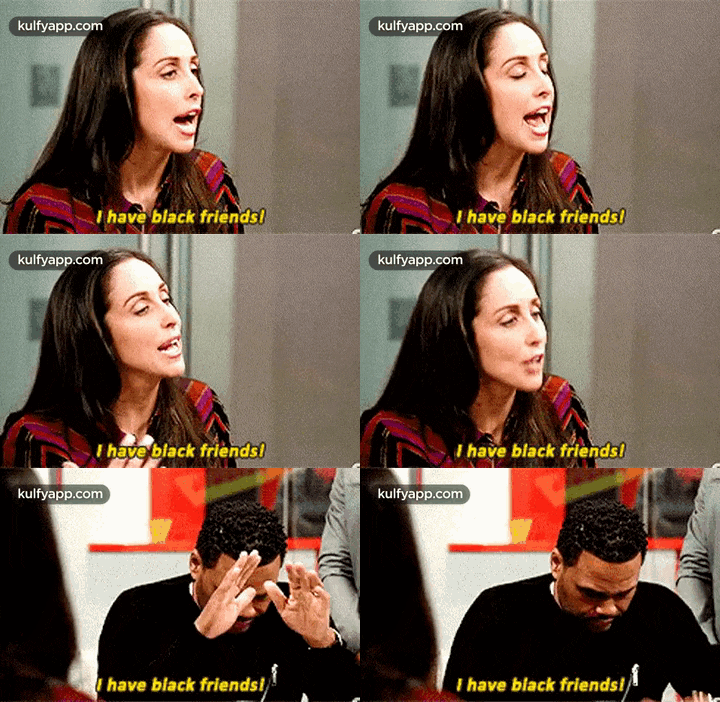
The phrase has become cultural shorthand for defensive racial performance. From black‑ish.

The Help (2011). All African-American characters defined by their domestic roles.
Though I genuinely admire Kathryn Stockett’s The Help as a novel, it illustrates this trope: all of the African-American characters occupy a servant class, and their stories are filtered through the white author-surrogate’s lens. The problem isn’t writing about domestic workers — it’s when all Black characters are defined by their service role, and their humanity is framed as something a white character discovers, rather than something that simply exists.
Again using The Help as an example: the young white writer gives the African-American maids the vehicle — and the permission — to tell their own stories. The white savior narrative centers white moral agency while positioning Black characters as passive beneficiaries of white intervention. It appears any time a Black character’s liberation or dignity depends on a white character choosing to bestow it.

A narrative structure that centers white moral agency at the expense of Black self-determination.
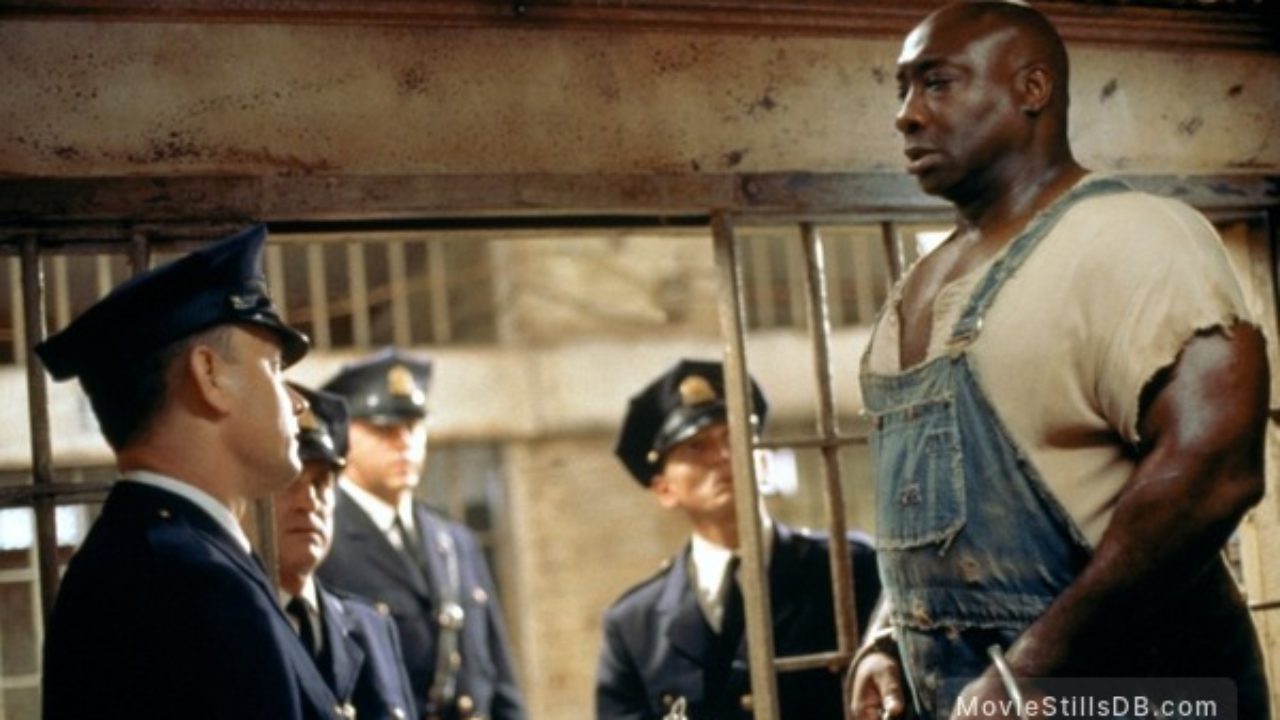
The Green Mile (1999). John Coffey’s humanity made legible only through his supernatural gifts.
Nnedi Okorafor’s essay “The Magical Negro,” originally published in the 2004 anthology Dark Matter: Reading the Bones, describes this trope as characters with supernatural, spiritual, or instinctive powers used to help a white protagonist. In Stephen King’s The Green Mile, the African-American character John Coffey is only accepted and mourned by the white guards because he possesses miraculous healing powers. His value is entirely contingent on what he can provide to the white characters around him.
The stories of American slavery are important and must be told. But the frequency with which Caucasian authors reach for slavery as the frame for Black characters — compared to the far smaller number who write African-American characters simply living their lives outside those painful chapters — reveals something about whose imagination is being served. Harriet Beecher Stowe’s Uncle Tom’s Cabin was a landmark abolitionist text, yet “Uncle Tom” has become the archetype of a Black character defined entirely by victimhood and servility, filtered through white moral outrage. African-American authors have spent generations writing against that archetype.
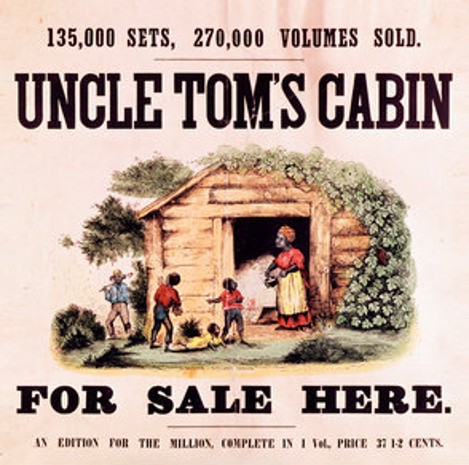
Harriet Beecher Stowe’s Uncle Tom’s Cabin (1852). A foundational abolitionist text whose title character became an archetype of Black passivity.
In summary, changing Todd Chandler to Kenneth Robinson was more than changing his ethnicity. It required examining and acknowledging the subtle differences that, when repeated, exemplify death by a thousand cuts. And most sobering, I had to examine my own lack of experiences being treated without privilege — which is a different level of understanding than racial awareness. I sincerely hope that this post will deepen reader awareness when reading What Must Be Stopped and more readers can pick up on the small cues they might have missed as to how Kenneth Robinson navigates a professional environment as an African-American.