Did Christopher Columbus Have an Amorous Affair with Doña Beatriz de Bobadilla?
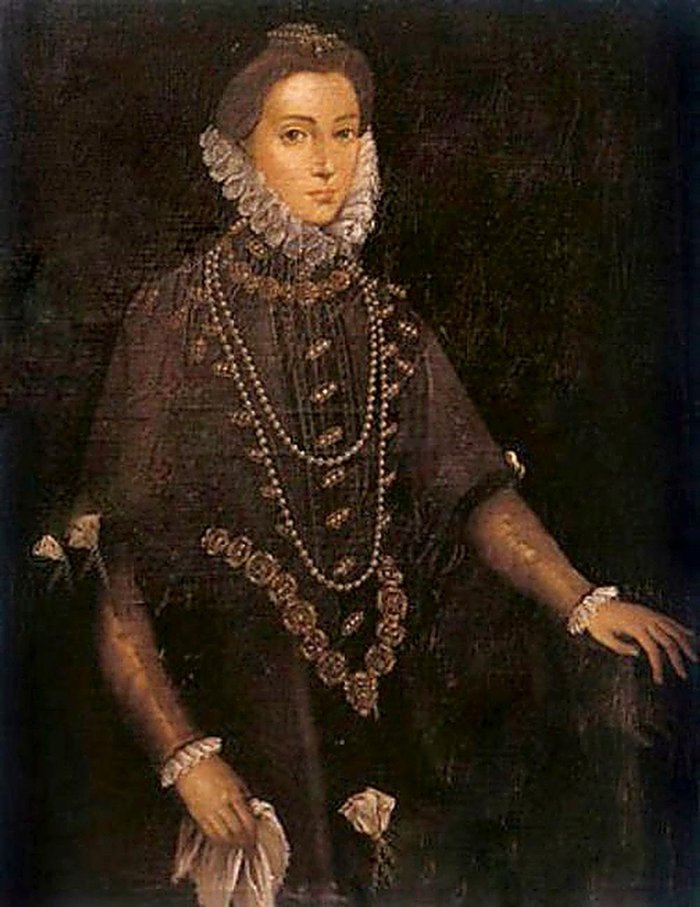
Originally, I was not going to include this topic of historical research for Book Two. However, during a July 2026 visit to Spain, I discovered that not only do many in Spain have an interest in the history of Christopher Columbus, but numerous guides and tourists showed great enthusiasm in the alleged affair between Christopher Columbus and Doña Beatriz de Bobadilla of the Canary Islands.
Who Was Doña Beatriz de Bobadilla
Born in 1462, Beatriz gained the nickname "the huntress" — not for her beauty or her pursuit of lovers, but after her father's title of chief huntsman, and also to distinguish her from her famous aunt, Beatriz de Bobadilla, first Marchioness of Moya and friend of Ysabel I of Castile. [2]
She is reputed to have had several lovers prior to being married. However, her only proven lover was Rodrigo Téllez Girón, Master of the Order of Calatrava, who by virtue of his position as a friar could not marry. [1] Shortly after his death in battle in July of 1482, Beatriz became a lady-in-waiting to Queen Ysabel, where King Ferdinand took notice of her beauty — and Queen Ysabel took notice of Ferdinand's attention. [1] [2] Rumors suggest Queen Ysabel created a plot to have her killed, but her aunt, also named Beatriz de Bobadilla and a close friend of the queen, convinced the Queen to take a different approach. Conveniently, Hernán Peraza, lord of the Canary Islands of La Gomera and El Hierro, was at the royal court, having been summoned by the monarchs to answer for the mysterious death of the conquering captain Juan Rejón on his island.
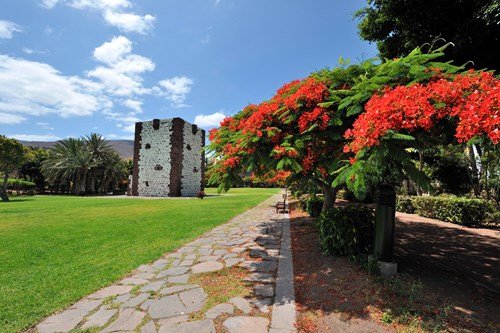
Queen Ysabel forced Peraza to marry Beatriz if he wanted to be pardoned for the crime. Shortly thereafter they were married, Peraza forgiven, and Beatriz the huntress left the court and moved to La Gomera in the Canary Islands. [2] There they had two children before Peraza reportedly had an affair with a native woman, Yballa. Chief Hautacuperche killed Peraza in 1488, setting off the Rebellion of the Gomeros, during which Beatriz de Bobadilla was besieged in the tower pictured here, which still stands today, until aid arrived. [2]
What We Know about Columbus and Beatriz de Bobadilla
It is highly probable, though not confirmed through documentation, that Columbus and Beatriz de Bobadilla met and possibly had regular interactions from 1491 to 1492, when Beatriz de Bobadilla attended the royal court in Córdoba and later Santa Fe, as has been historically documented. During this time, historical documentation also places Columbus at the royal court awaiting the crown's decision. Consequently, Rumeu de Armas argues that de Bobadilla and Columbus encountering each other, especially at the small Santa Fe military encampment, was “an indisputable historical fact.” [1]
According to his diary, we know that Christopher Columbus was in the Canary Islands from August 9th until September 6th, 1492. Incidentally, the month's delay cost an estimated 250,000 maravedis in salaries and supplies. [4] We also know that the rudder of La Pinta was sabotaged and that repairs had to be made. Other than that, we have no knowledge at all of what transpired from August 9th until September 6th — it is the only gap in the Columbus diary during the voyage.
The reason for the intrigue is that Miguel Cuneo, the official chronicler on the second Columbus expedition, wrote the following in October 1493:
And Columbus was reported to be "surprised" when he found that Beatriz de Bobadilla was married to Don Alonso Fernández de Lugo (a character in Book Two) when he stopped at the Canary Islands. [3]
The historian Antonio Rumeu de Armas described her as (summarized): a passionate, harsh woman prone to sudden, unplanned reactions driven by violent impulse — someone who feuded with all her relatives and could never be reconciled with any of them. In governing her territories, her iron hand fell equally on high and low, powerful and humble alike, showing particular severity toward the indigenous population; her harsh justice became infamous and was never forgotten. At the same time, she could be tender, sensitive, and prone to falling deeply in love, capable of volcanic passions — and, by all contemporary accounts, strikingly beautiful. [1]
An interesting coincidence worth noting — Beatriz's brother, Francisco de Bobadilla, was the investigating judge appointed by the Monarchs who dismissed Columbus as governor and sent him back to Spain in chains.
What Is Said about Columbus and Beatriz de Bobadilla
Much is said in historical accounts that is likely incorrect. She is often confused with her aunt, Beatriz de Bobadilla, Marquise of Moya and childhood friend of Queen Ysabel. There are even accounts of it being Eleanor de Bobadilla, Beatriz's younger sister, who caught the eye of Ferdinand and moved to La Gomera.
Author Conclusions about Columbus and Beatriz de Bobadilla
I took the position that Columbus and Beatriz de Bobadilla each saw in the other a strategic partner who could help advance their own goals. Given that Hernando, Columbus's son, was three years old, and Columbus had had a five-year relationship with his mother, Beatriz de Arana, it is unlikely that Columbus and Beatriz de Bobadilla met and courted earlier. There is no correspondence or mention of anything to say they met before 1492. Additionally, rumors would have swirled about the affair, and Diego de Arana, Beatriz de Arana's uncle, would not have gone on the voyage as Master-at-Arms if rumors were already swirling about Columbus having an affair with Beatriz de Bobadilla.
Regarding the nature of their relationship, a sexual affair was possible. It is highly likely, given Cuneo's later account of the Admiral and the lady being deeply in love, that Columbus pursued a romantic interest in Beatriz de Bobadilla during the month he spent in the Canary Islands. Both were believed to be vain and emotional people, and so they could have justified almost anything to themselves. Beatriz was likely more cunning than Columbus. Though she later accepted her place in the Canary Islands, in 1492 she was trying to get back to the royal court, and she saw Columbus as the vehicle to do so.
Based on status — rather than physical need — being supremely important to both of them, in the book I created tension and romantic interest, but not an affair. It is more likely she flirted with him and made him feel infatuated with her. She did not get men of high social status visiting often. If she thought sex would get her off the island and back to Spain, she would have done it without hesitation. But here was a man sailing off into the unknown, and she didn't want a third child; she wanted a husband.
I believe she saw marrying Columbus, not becoming his lover, as her strategic goal. I depicted them walking arm in arm, engaged in courtship. Though I did not detail their conversations in the book during their walk, I believe they most likely discussed plans for marriage after his return from the voyage, and spent delightful days walking around the island, each absorbed in their own — and each other's — vain vision for how they could become a power couple back in Spain: how Queen Ysabel would be glad to have Beatriz back as a confidante, without Ferdinand's wandering eyes upon her now that she was married and older, and how Columbus would gain an insider ally to increase his influence at court.
However, I leave it to the reader's imagination what they discussed on their walks. This is the truest I could be to history, rather than inserting my own speculation about plans that never came to fruition. But if you look at the small clues in their interactions, they are courting each other, not having an affair. By not having an affair, Beatriz de Bobadilla was able to share only her tender side, and, of course, her beauty. Her less beautiful interior stayed hidden — until after a wedding.
Sources
- Ruméu de Armas, Antonio. “Los Amoríos de Doña Beatriz de Bobadilla.” Anuario de Estudios Atlánticos, núm. 31 (1985), pp. 413–455. Primary academic source for Beatriz's character description, her relationship with Rodrigo Téllez Girón, and the Cuneo letter transcription. Also argues, based on overlapping documented travel records, that Beatriz and Columbus's presence in Córdoba and Santa Fe in 1491–92 makes an acquaintance before the 1492 voyage more likely than not — a point this page's “What Is Said” section below treats more skeptically; see note.
- Wikipedia contributors. “Beatriz de Bobadilla (señora de La Gomera).” es.wikipedia.org
- “Historias de amor y desamor entre Colón y Beatriz de Bobadilla, señora de La Gomera.” jardin-tecina.com
- Calculations by Graham Balch, based on the number of persons on the 1492 voyage and customary wages for sailors and officers for the duration of one month.
← Back to Historical Research