How Old Was Beatriz Enríquez de Arana When She Met Christopher Columbus?
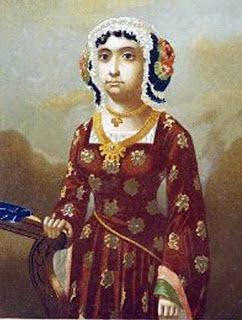
One of the most controversial elements in the book Into the Unknown is Beatriz Enríquez de Arana's age. The internet consensus — including what is stated on Wikipedia without citation [2] — is that Beatriz was 23 when she gave birth to Fernando and 20 or 21 when she met Christopher Columbus, placing her birth in 1465. Notably, none of these sites cite a source for the 1465 date. Based on the research below, I believe the most plausible scenario is that Beatriz was born in late 1469 or early 1470 — making her sixteen when she met Columbus, seventeen when she became pregnant, and eighteen (Columbus was thirty-seven) when Fernando Columbus was born.
What the Record Actually Shows
No historical record documents Beatriz's birth or death year. Two known dates help narrow the possibilities. The first is that her mother, Ana Núñez de Arana, executed a will and died on June 2, 1471. The will reads:
In English: “Pedro and Beatriz, her legitimate children” (by Pedro de Torquemada, their father). [1]
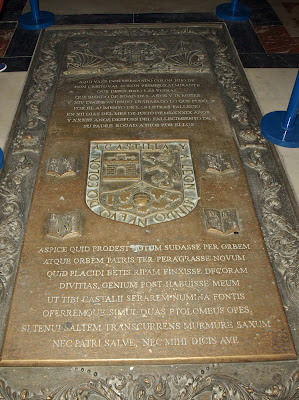
The second known date is that Beatriz Enríquez de Arana gave birth to Fernando Columbus on September 28, 1488, with Christopher Columbus as the father. This is not, in fact, the date most commonly repeated online — that date, August 15, 1488, traces to a manuscript described as being in Fernando's own hand, but no source anywhere quotes that manuscript directly. A third date, August 29, 1487, comes from the historian Diego Ortiz de Zúñiga, citing unspecified Seville church records. September 28, 1488 comes from a source that can still be examined today: Fernando's own tombstone in the Cathedral of Seville, which states his age at death down to the day [16]. It is also the earliest source tying to a specific birth date — whoever commissioned the tomb in 1539 gave the carver an age precise to the day, only 51 years after the fact, well within living memory. The other two dates rest on manuscripts and records that no source consulted for this page has located or quoted directly. The tomb inscription is not immune to error — the age could have been given to the carver wrong, or carved wrong — but that is a narrower and more ordinary kind of uncertainty than a citation with no verifiable source behind it at all, which is why September 28, 1488 is used here.
De Arellano's Two Speculations
Historian Rafael Ramírez de Arellano, working from the Arana family's surviving legal records, made two speculations that anchor most later reasoning about Beatriz's birth year [1]:
English: “It is very likely that Beatriz's birth was the occasion of her mother's death.”
English: “Beatriz must have been between fifteen and twenty years old on January 20, 1485,” which would place her birth between 1465 and 1470.
Examining both speculations against the historical record and the customs of the period reveals evidence that supports parts of De Arellano's reasoning and evidence that contradicts other parts.
Ruling Out the Other Causes of Death
Regarding the first speculation, after extensive research I concluded that Ana Núñez de Arana most likely did die of childbirth. The six leading causes of death for women in the late 15th century were the plague, “consumption” (tuberculosis and other respiratory diseases), “fevers and agues” (typhoid, malaria, and other feverish illnesses), “the flux” (gastrointestinal diseases including dysentery), “consumido” (malnutrition), and “childbed” (complications during childbirth).
Most of these can likely be eliminated. There was no plague near Ana's death (see Table One below); Pedro and Ana were relatively well-off, owning orchards and vineyards, which made malnutrition unlikely. Gastrointestinal disease and typhoid — often contracted from contaminated water or food — were unlikely, since the family drew water from a private well and shared the same food and water with no other reported deaths, including among the more vulnerable young children.
Tuberculosis cannot be entirely ruled out, but it is less likely for this specific family, for several reasons. A low body mass index or chronic macronutrient deficiency doubles to triples the risk of a latent tuberculosis infection progressing to active disease [5][6][7] — and malnutrition, while common in 15th-century Iberia, was not a factor for a more affluent family such as the Aranas, as noted above. Second, in modern epidemiological modeling of historic tuberculosis, researchers note that before the advent of sanitation, severe “smear-positive” cases predominated in dense urban settlements [8]; the Arana family did not live in a dense urban environment but among orchards and vineyards. Third, individuals in poorly ventilated, enclosed medieval housing likely did not experience a single exposure but continuous re-exposure, which overwhelms the lungs' primary immune defenses and significantly increases the likelihood that an initial infection fails to go latent and progresses directly to active disease [9][10]; again, a family living among orchards and vineyards was less likely to face that kind of repeated, enclosed re-exposure. In the absence of the contributing factors typically associated with active tuberculosis, the Arana family was substantially less likely to develop it than the population of 15th-century Iberia as a whole.
| Date Range | Plague Occurrence |
|---|---|
| 1458–1459 | A severe outbreak hit Córdoba specifically, with over 200 burials that year at the San Jerónimo monastery alone — serious enough that the cabildo (city council) organized religious processions and hospital donations in response. [14] |
| 1468–1469 | A general plague wave affected “the Castilian arc” more broadly, not localized to Córdoba specifically. It did not continue to 1471. [14] |
| 1473 | A single recorded case: a fourteen-year-old servant girl named Juana, examined for “pestilencia” with “dolor de costado e calentura continua pestilencial.” This reads as an isolated case rather than a citywide epidemic, and in any case falls two years after Ana's death. [14] |
That leaves complications from childbirth — which De Arellano speculated, and which the analysis above supports, though not definitively — as the most probable cause of Ana Núñez de Arana's death.
Was Beatriz the Child Born in 1471?
The second component of De Arellano's first speculation is that Beatriz was the child whose birth coincided with her mother's death on June 2, 1471. The custom in 15th-century Iberia was to list sons before daughters in legal documents, so the fact that Pedro is named before Beatriz in the will lends no greater likelihood that either child was older — it is simply the convention of the only surviving record, and the foundation of De Arellano's speculation.
De Arellano also notes that at the time of Fernando Columbus's death in 1539, his uncle Pedro was still alive [1]. If Pedro had been born on June 2, 1471, he would have turned 68 in 1538 — exceeding the average life expectancy of 50 to 60 years once one reached age 20 (thereby excluding childhood mortality) [3]. Pedro being listed first would not significantly raise his age, and his surviving past 1539 is not conclusive on its own; but as weak as it is, this detail makes the coin toss over which sibling was born in 1471 roughly 51/49 in favor of Beatriz rather than Pedro.
Birth Spacing and a Revised Estimate
This matters less than it might seem, however, because as a relatively well-off family, the Aranas likely employed a wet nurse, and research shows that aristocratic families, on average, had shorter intervals between children, since breastfeeding inhibits ovulation and wet-nursing allows it to resume sooner [4]. Assuming Beatriz was born first, she was therefore likely only 15 to 18 months older than Pedro — placing her birth sometime between late 1469 and early 1470, rather than in 1471 itself.
Why the 1465 Date Persists
If Beatriz was the older of the two children, that makes her 15 or 16 when she met Christopher Columbus, not 14 or 15. I believe Columbus's promoters and defenders took the upper boundary of De Arellano's speculative range — that she was between fifteen and twenty when she met Columbus — and treated it as the floor rather than the ceiling. Taking the earliest possible date she could have met Columbus, in early 1485, and the high end of De Arellano's range, twenty, produces the oldest possible age for Beatriz at that meeting. Because no source anywhere supports the 1465 birth-year hypothesis, I believe this kind of conjecture — consistently rounded toward the older end — is what produced the 1465 date now widely repeated as settled fact.
One example of this broader pattern of rounding Beatriz older than the record supports is the 1992 film 1492: Conquest of Paradise, in which Ángela Molina — 35 at the time of filming — played Beatriz Enríquez de Arana. Casting a woman twice Beatriz's likely age at the time reflects the same pattern of inflation this research argues against.
Despite Into the Unknown being a work of fiction, the author meticulously researched historical details in order to portray the relevant events and characters as accurately as our current body of knowledge allows — including that sixteen-year-old Beatriz Enríquez de Arana met Christopher Columbus and a romantic relationship began between them, leading to the birth of their son, Fernando, roughly three and a half years later.
Sources
- Ramírez de Arellano, Rafael. “Datos nuevos referentes a Beatriz Enríquez de Arana y los Aranas de Córdoba.” Boletín de la Real Academia de la Historia, tomo 37 (1900), pp. 461–485. Primary source for the mother's will, both of De Arellano's speculations, and the detail of Pedro outliving Fernando Columbus.
- Wikipedia contributors. “Beatriz Enríquez de Arana.” en.wikipedia.org Cited here as the source of the unattributed 1465 birth-year claim this page argues against.
- “Medieval Myth-Busting: Life Expectancy.” medievallauren.wordpress.com
- Encyclopedia.com. “Wet-Nursing.” encyclopedia.com
- “Undernutrition and tuberculosis risk.” pmc.ncbi.nlm.nih.gov
- Cochrane. “Undernutrition May Double Risk of Tuberculosis.” cochrane.org
- CIDRAP. “Study Shows Undernourishment Increases Risk of TB.” cidrap.umn.edu
- “Smear-positive tuberculosis and historic urban density.” pmc.ncbi.nlm.nih.gov
- “Pre-antibiotic tuberculosis care and disease progression.” pmc.ncbi.nlm.nih.gov
- “Re-exposure and tuberculosis progression in enclosed historic housing.” pmc.ncbi.nlm.nih.gov
- Look and Learn. “Beatriz Enriquez de Arana, mistress of Columbus.” lookandlearn.com
- Cristoforo Colombo. “Beatriz Enriquez de Arana, madre di Fernando Colombo.” cristoforocolombo.com
- Bridgeman Images. “Beatriz Enriquez de Arana, mistress of Columbus” (colour lithograph). bridgemanimages.com
- Fernández Sánchez, David. “La Peste Negra en la Corona de Castilla (siglos XIV y XV): El caso de Córdoba.” Revista Anahgramas, no. VIII (2021), pp. 140–185, Universidad de Córdoba. journals.uco.es Source for Table One.
- Tomb inscription of Hernando Colón, Cathedral of Seville: “AQUI YAZE DON HERNANDO COLON HIJO DE DON CRISTOVAL COLON PRIMERO ALMIRANTE QUE DESCUBRIO LAS YNDIAS QUE SIENDO DE EDAD DE L AÑOS Y IX MESES Y XIV DIAS E AVIENDO TRABAJADO LO QUE PUDO POR EL AUMENTO DE LAS LETRAS FALLECIO EN XII DIAS DEL MES DE JULIO DE MDXXXIX AÑOS Y XXXIII AÑOS DESPUES DEL FALLECIMIENTO DE SU PADRE ROGAD A DIOS POR ELLOS.” Photographed at the Cathedral of Seville; image credit Sevilla Daily Photo, sevilladailyphoto.blogspot.com. Primary source for Fernando Columbus's birth date. His stated age at death (50 years, 9 months, 14 days as of July 12, 1539) places his birth on September 28, 1488 — the same date given independently by Washington Irving (see below). Note that this monument's history (whether it is the original 1539 stone) has not yet been independently confirmed.
- Two other birth dates for Fernando Columbus are attributed elsewhere and not used here: August 15, 1488 (Martín Fernández de Navarrete, Colección de los viajes y descubrimientos, citing an undated manuscript said to be in Fernando's own hand, held at the Biblioteca Colombina, Seville — not independently located or quoted by any source consulted for this page), and August 29, 1487 (Diego Ortiz de Zúñiga, Anales Eclesiásticos y Seculares de Sevilla, 1677, citing unspecified church records in Seville — likewise not independently located).